Table of Contents
-
Introduction
-
What Are Industrial Conveyors?
-
Why Industrial Conveyors Are Essential in Manufacturing
-
Main Types of Industrial Conveyors
-
Belt Conveyors
-
Roller Conveyors
-
Chain Conveyors
-
Screw Conveyors
-
Overhead Conveyors
-
Pallet Conveyors
-
-
Key Benefits of Industrial Conveyor Systems
-
Selecting the Right Conveyor Type for Your Operation
-
Conveyor Applications by Industry
-
Safety and Maintenance Best Practices
-
Integration with Automation and Industry 4.0
-
Cost Considerations and ROI
-
Future Trends in Industrial Conveyor Technology
-
Conclusion
-
FAQs
1. Introduction

In fast-paced manufacturing environments, efficiency, safety, and automation are top priorities. One of the core systems driving these outcomes is the industrial conveyor. Whether it’s transporting parts across an assembly line or sorting packages in a distribution center, industrial conveyors play a critical role in productivity and plant performance.
In this guide, we’ll cover everything plant managers, engineers, and procurement teams need to know to make informed decisions about conveyor system investments.
2. What Are Industrial Conveyors?
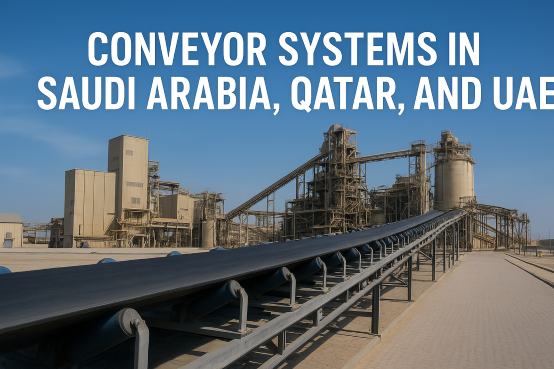
Industrial conveyors are mechanical systems designed to move materials within manufacturing facilities, warehouses, and industrial plants. They provide continuous or intermittent movement, helping to reduce manual labor and optimize production flows.
3. Why Industrial Conveyors Are Essential in Manufacturing
🏭 Benefits for Operations Managers:
-
Streamlined material flow
-
Reduced worker fatigue and injury
-
Improved cycle time
⚙️ Benefits for Engineers:
-
Consistent, controllable process integration
-
Compatibility with sensors and PLCs
-
Customizable to specific materials and workflows
💼 Benefits for Procurement:
-
Long-term ROI
-
Modular upgrades
-
Lower workforce dependency
4. Main Types of Industrial Conveyors
Choosing the right conveyor type depends on your materials, floor space, load requirements, and budget.
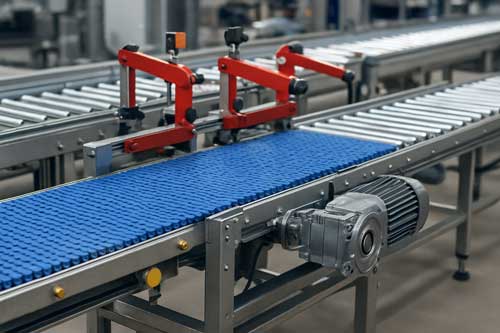
🔹 Belt Conveyors
Keyword Target: Belt conveyors
Used to move light to medium-weight materials. Ideal for:
-
Packaging lines
-
Food and beverage
-
Electronics
Belt Materials: PVC, PU, rubber, modular plastic
Advantages: Quiet, versatile, easy to maintain
🔹 Roller Conveyors
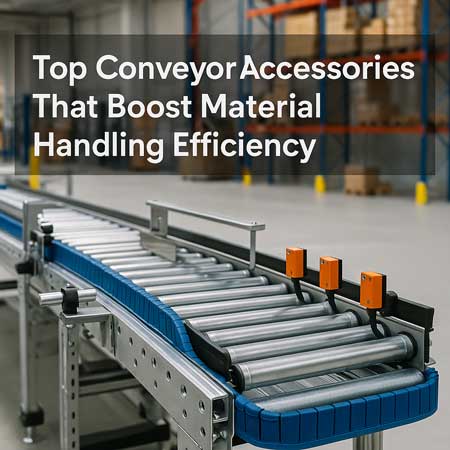
Perfect for boxed or flat-bottomed goods.
Types:
-
Gravity rollers (no motor)
-
Powered rollers (motorized)
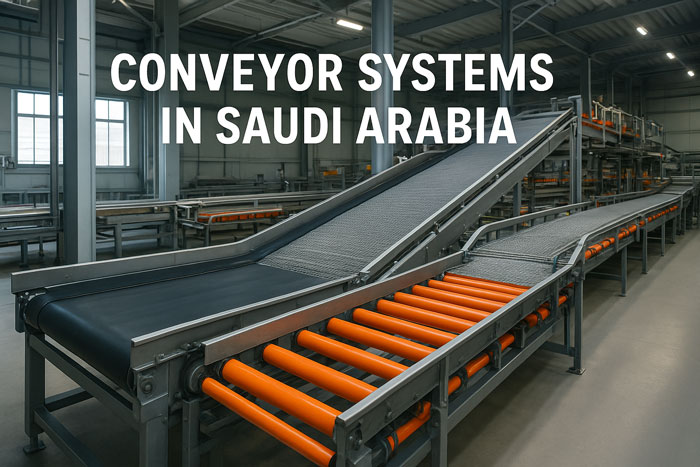
Use Cases: Warehouses, e-commerce, parcel sorting
🔹 Chain Conveyors
Best for heavy loads or environments with grease, moisture, or temperature extremes.
Industries: Automotive, steel plants, ceramics
🔹 Screw Conveyors
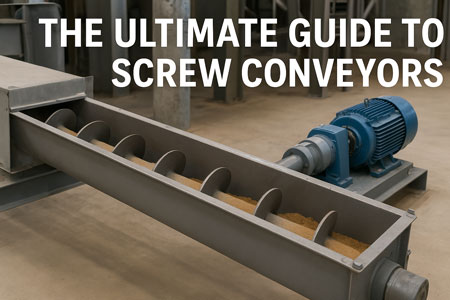
Move granular or powder materials using a rotating screw.
Applications: Cement, chemicals, agriculture, food processing
Advantages: Dust-free movement, precise volume control
🔹 Overhead Conveyors
Maximize floor space by moving items above head height.
Use Cases: Paint shops, garment lines, auto parts assembly
Types: Enclosed track, I-beam, power-and-free
🔹 Pallet Conveyors
Keyword Target: Pallet handling conveyors
Built to transport heavy pallets safely and efficiently.
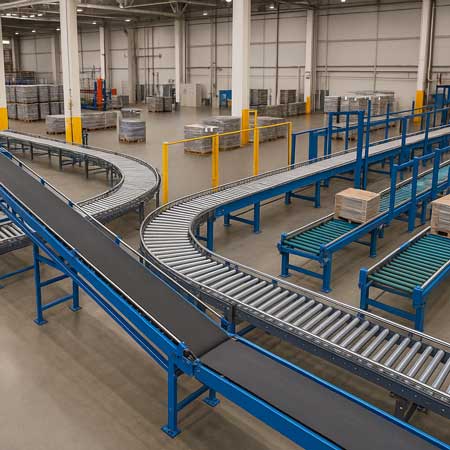
Conveyor Bases: Chain-driven live roller (CDLR), drag chain
Add-ons: Turntables, transfer carts, lift tables
5. Key Benefits of Industrial Conveyor Systems
✅ Speed and Efficiency
Moves products faster than manual transport, reducing cycle times.
✅ Labor Reduction
Eliminates repetitive or dangerous tasks.
✅ Increased Safety
Prevents lifting injuries and product damage.
✅ Continuous Operation
24/7 uptime in automated facilities.
✅ Scalability
Modular systems allow future expansion.
6. Selecting the Right Conveyor Type for Your Operation
Before buying or upgrading, ask these questions:
| Consideration | Why It Matters |
|---|---|
| Load Weight | Dictates motor size and frame material |
| Product Type | Irregular vs. regular shapes |
| Throughput | Required speed and volume |
| Plant Layout | Available space and workflow |
| Environment | Cleanroom, wet, hot, or corrosive? |
| Automation | Need for sensors, PLCs, integration? |
Partnering with a specialist helps tailor the right system for your exact use case.
7. Conveyor Applications by Industry
Each sector has unique needs when it comes to industrial conveyors:
🛠️ Manufacturing
-
Assembly lines
-
Component sorting
-
Work-in-progress transport
🚚 Logistics
-
Parcel sorting
-
Distribution hubs
-
E-commerce warehouses
🍞 Food & Beverage
-
Hygienic conveyors
-
Metal detectors and air knives
🚗 Automotive
-
Engine block handling
-
Paint booths
-
Chassis assembly
🧪 Chemicals & Pharmaceuticals
-
Screw conveyors for powders
-
Cleanroom belt systems
8. Safety and Maintenance Best Practices
A well-designed conveyor system is only as effective as its safety and maintenance plan.
🔒 Safety Essentials:
-
Emergency stop switches
-
Guard rails
-
Belt tracking sensors
-
Operator training
🔧 Maintenance Tips:
-
Lubricate moving parts regularly
-
Inspect belts and chains for wear
-
Keep sensors clean and calibrated
-
Maintain a stock of key spare parts
9. Integration with Automation and Industry 4.0
Modern factories demand intelligent, connected conveyor systems.
Smart Features:
-
Sensors to detect jams, overloads, or empty lanes
-
PLCs and SCADA systems for control and feedback
-
Integration with ERP, WMS, and robotics
Automated conveyor systems are now standard for plants adopting Industry 4.0 and smart manufacturing frameworks.
10. Cost Considerations and ROI
Initial Costs:
-
Base conveyor frame and motor
-
Sensors, controls, and accessories
-
Installation and layout design
Operational Costs:
-
Power consumption
-
Maintenance labor and spares
-
Downtime during servicing
ROI Drivers:
-
Labor savings
-
Increased output
-
Fewer product damages
-
Reduced lead times
Most facilities see payback within 12–24 months depending on usage and automation level.
11. Future Trends in Industrial Conveyor Technology
As factories evolve, conveyor systems are getting smarter, safer, and more sustainable.
🌐 IoT & Predictive Maintenance
-
Real-time alerts for jams, slippage, or overload
-
Remote monitoring dashboards
🧠 AI & Machine Learning
-
Dynamic speed adjustment
-
Automated routing of goods
♻️ Sustainability
-
Energy-efficient motors
-
Recyclable belts
-
Reduced lubrication needs
🤖 Cobots and AMRs
-
Automated material routing via Autonomous Mobile Robots (AMRs)
-
Human-machine collaboration zones
12. Conclusion
Whether you’re expanding your production line or starting from scratch, industrial conveyors are the foundation for efficient material handling.
By understanding conveyor types, selecting based on your process needs, and maintaining safety standards, you’ll ensure maximum uptime, productivity, and long-term ROI.
If you’re looking to reduce manual labor, increase speed, and future-proof your plant, investing in the right conveyor system is the next smart move.
13. Frequently Asked Questions (FAQs)
Q1: Which type of industrial conveyor is best for my factory?
A: It depends on your materials, weight, speed, and floor space. Belt conveyors are common for general use, while chain or pallet conveyors are ideal for heavy-duty operations.
Q2: How often should conveyors be maintained?
A: At minimum, conduct monthly inspections. High-use facilities may need weekly or even daily checks.
Q3: Are industrial conveyors customizable?
A: Yes! They can be custom-fit for size, shape, material, layout, and level of automation.
Q4: What’s the difference between an industrial and a commercial conveyor?
A: Industrial conveyors are designed for high-duty, long-term use in factories; commercial systems are typically lighter-duty for retail or light warehouse use.