by admin | Jul 30, 2025 | Blog
Introduction
Efficient pallet movement is essential for large-scale warehouse and manufacturing environments. In this guide, we’ll explore how pallet handling conveyors revolutionize warehousing operations by improving efficiency, reducing manual labor, and ensuring seamless flow between production and distribution.
With rising demands in manufacturing and warehousing, traditional pallet movement techniques such as manual trolleys and forklifts are no longer sufficient. As industry standards evolve toward automation and digital inventory management, pallet handling conveyors have become the backbone of modern material handling solutions.
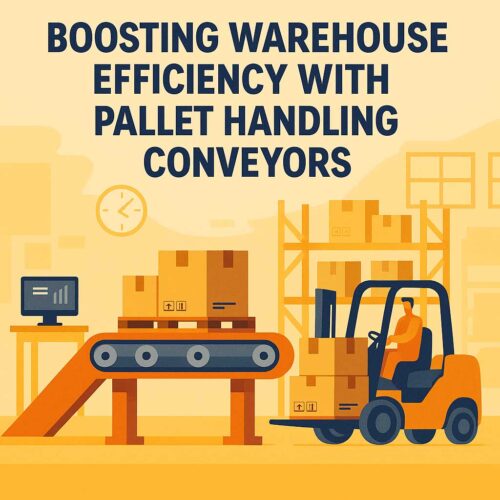
1. What Are Pallet Handling Conveyors?
Pallet handling conveyors are heavy-duty conveyor systems specifically designed to move loaded pallets from point A to B efficiently. They are engineered for strength, safety, and compatibility with industrial environments. These conveyors are the preferred solution when dealing with:
- Bulk storage facilities
- Heavy material movement
- Automated loading/unloading zones
- Integrated warehousing and shipping systems
Common Types Include:
- Chain-driven live roller conveyors
- Gravity roller conveyors
- Motorized pallet transfer systems
- Lift and rotate conveyors
- Pallet stackers and dispensers
Each system is tailored based on application, throughput, available space, and level of automation desired.
💡 Did You Know? ENTRA Electromechanical custom-builds pallet conveyors for GMA and Euro pallet standards, ensuring compatibility across global warehouse operations.
2. Benefits of Using Pallet Handling Conveyors
Let’s break down the major advantages:
✅ 1. Increased Efficiency
Automated movement of pallets means faster throughput, minimal waiting time between processes, and more SKUs handled per hour.
✅ 2. Labor Optimization
Manual labor can be reallocated to higher-value tasks as conveyor systems take over repetitive transportation work.
✅ 3. Enhanced Workplace Safety
Forklift accidents are a leading cause of injury in logistics. Replacing forklifts with fixed conveyors drastically reduces risks.
✅ 4. Consistent Workflow
By maintaining a constant pace of movement and buffering between processes, bottlenecks are significantly reduced.
✅ 5. Real-time Inventory Tracking
Most systems can be integrated with barcode/RFID readers, feeding live data into ERP or WMS platforms.
3. Where Pallet Handling Conveyors Make the Biggest Impact
Industries Benefiting from Pallet Conveyors:
- Food and Beverage: Bottling and packaging lines
- FMCG: Rapid warehousing and outbound logistics
- Retail Distribution: High-volume fulfillment centers
- Pharmaceuticals: Cold chain storage and dispatch
- Heavy Manufacturing: Component transfers and part bin handling
🏭 ENTRA Electromechanical successfully implemented a full-scale pallet conveyor network in a Giza-based packaging facility, resulting in a 34% increase in throughput.
4. Key Design Factors to Consider
When selecting or designing a pallet conveyor system, consider:
- Weight Capacity: Can it support fully loaded pallets over long distances?
- Pallet Orientation: 2-way vs. 4-way pallets influence roller size and pitch.
- Footprint & Layout: Floor space and potential for vertical integration.
- Speed & Accumulation: Should it allow queuing or require indexing movement?
- Safety Requirements: Guardrails, emergency stops, safety curtains.
ENTRA provides full layout consultation, including AutoCAD diagrams and material flow simulation.
5. Integration with Warehouse Management Systems (WMS)
Smart conveyors communicate with WMS platforms to:
- Confirm pallet locations
- Control movement between stations
- Enable just-in-time picking or shipping
- Track maintenance status of conveyor modules
This connectivity leads to better visibility and informed decision-making.
6. Real-Life Case Study: ENTRA’s Cold Chain Success
Client: A multinational dairy processor Location: 6th of October Industrial Zone Solution:
- Dual-lane chain-driven pallet conveyor
- Automated lift stations for cold/freezer zones
- Integrated barcode scanning
Outcome:
- 50% cut in manual handling
- Order fulfillment accuracy rose by 18%
- ROI achieved in just 6 months
7. Maintenance Requirements
Although built for durability, pallet conveyors require:
- Weekly inspection of drive chains and motors
- Belt tensioning and lubrication
- Cleaning of debris from accumulation zones
- Annual electrical control panel calibration
ENTRA provides maintenance training and annual servicing contracts tailored to plant uptime schedules.
8. Cost Breakdown and ROI Calculation
Initial System Cost:
- Depends on system requirements.
- ROI Factors:
- Reduction in labor hours
- Lower product damage
- Improved floor utilization
- Faster order processing
Typical ROI Period: 8–14 months depending on scale
9. Why Choose ENTRA Electromechanical?
- 15+ years of experience in custom conveyors
- Full Egyptian-based manufacturing and support
- Engineering consultancy included
- Reference installations across Egypt and GCC
Contact ENTRA for an on-site assessment or CAD simulation of your facility today: entra-eg.com
Conclusion
In an era of rising demand, fluctuating labor markets, and increasing safety concerns, pallet handling conveyors are a game-changing investment. They ensure efficient, safe, and scalable warehouse operations.
As factories in Egypt and the Middle East shift toward Industry 4.0, ENTRA Electromechanical continues to lead the charge by delivering custom, reliable, and scalable material handling solutions.
Whether you operate a single facility or a network of logistics hubs, pallet conveyor systems are no longer optional—they are essential.

by admin | Jul 29, 2025 | Blog
Table of Contents
-
Introduction to Pallet Handling Conveyors
-
Key Components of Pallet Conveyors
-
Benefits in Modern Manufacturing Environments
-
Integration with Warehouse Management Systems (WMS)
-
ENTRA’s Role in Egypt’s Conveyor Market
-
Common Types of Pallet Handling Conveyors
-
Safety and Maintenance Practices
-
Case Study Example
-
Conclusion & Recommendations

Pallet handling conveyors are specialized systems designed to move palletized goods within manufacturing, warehousing, or logistics operations. These conveyors reduce the reliance on forklifts and manual labor, improving safety and accelerating material flow.
A modern pallet conveyor system includes:
-
Chain-driven live roller conveyors (CDLR)
-
Drag chain conveyors
-
Pallet turntables and lifts
-
Transfer cars and shuttle carts
-
Integrated sensors and programmable logic controllers (PLCs)
Each component is engineered for heavy-duty handling, ensuring stable and smooth transportation of pallets across various zones.
3. Benefits in Modern Manufacturing Environments
✅ Time Efficiency:
Automated pallet conveyors reduce product handling time dramatically. For example, moving a 1-ton pallet from packaging to dispatch may take 2 minutes via conveyor versus 10–15 minutes manually.
✅ Labor Reduction:
Plants utilizing pallet conveyors often report a 30–40% decrease in required manpower for movement-related tasks.
✅ Improved Accuracy:
By integrating scanners and RFID tags, pallets are tracked in real-time, reducing errors and mix-ups.
✅ Enhanced Safety:
Minimized forklift traffic decreases the chance of workplace accidents and injuries.
✅ Energy Efficiency:
With smart drives and sensors, energy consumption is minimized during idle times.
4. Integration with Warehouse Management Systems (WMS)
Pallet handling conveyors work hand-in-hand with modern WMS. When ENTRA integrates a pallet conveyor system with a WMS, plant managers gain:
-
Real-time data on pallet location
-
Automated order picking and sorting
-
Integration with robotic palletizers
This tight integration allows smoother logistics and predictive maintenance scheduling.
5. ENTRA’s Role in Egypt’s Conveyor Market
ENTRA Electromechanical has positioned itself as a leader in pallet conveyor systems in Egypt and the Middle East. With a fully integrated design and fabrication facility in Giza, ENTRA provides:
-
Custom pallet conveyor lines
-
High-durability conveyor components
-
PLC automation and integration
-
On-site installation and testing
Their systems are used in industries ranging from FMCG and cement to automotive and electronics.
6. Common Types of Pallet Handling Conveyors
| Conveyor Type |
Description |
Use Case |
| CDLR (Chain-Driven Live Roller) |
Heavy-duty rollers driven by chains |
Suitable for transfer of full pallets in rugged environments |
| Drag Chain Conveyor |
Chains pull the pallet across a flat surface |
Best for slip-sheet or bottomless pallets |
| Turntable Conveyor |
Rotates pallets 90° or 180° |
Useful for corner transitions in compact plants |
| Transfer Car |
Rail-mounted cart that moves pallets laterally |
Ideal for multi-lane or multi-zone systems |
Best Practices Include:
-
Weekly inspection of chain tension and wear
-
Safety barriers to prevent unauthorized access
-
Emergency stop buttons within 3 meters of any operator
-
Vibration sensors for predictive failure detection
ENTRA provides manuals and training to every client post-installation to ensure long-term reliability.
8. Case Study: Improving Efficiency at a Food Packaging Facility in 6th of October
A major local food manufacturer partnered with ENTRA to automate pallet transfer between packaging and cold storage zones.
Results:
-
60% increase in packaging line throughput
-
Reduced pallet transfer time by 47%
-
Annual labor cost savings of over 750,000 EGP
ENTRA’s turnkey pallet handling solution included CDLR conveyors, motorized turntables, and IoT-enabled monitoring.
9. Conclusion & Recommendations
Pallet handling conveyors represent one of the most transformative investments for modern manufacturers. Whether you’re operating in logistics, food production, or heavy industry, integrating these systems:
📌 If you’re planning to upgrade your conveyor systems, ENTRA’s experts can provide a custom design and ROI calculation based on your facility layout.

by admin | Jul 28, 2025 | Blog
🚀 Introduction
In today’s competitive industrial landscape, maximizing efficiency, safety, and system reliability is not a luxury—it’s a necessity. For those managing or designing conveyor systems, one critical yet often overlooked factor is the selection and implementation of conveyor accessories.
From belt cleaners to guiding systems and sensors, these accessories can make or break the performance of your material handling equipment. In this guide, we dive into the essential conveyor accessories that every manufacturing plant should consider, especially if you’re aiming to boost uptime, reduce maintenance, and optimize flow.
🧠 Why Conveyor Accessories Matter
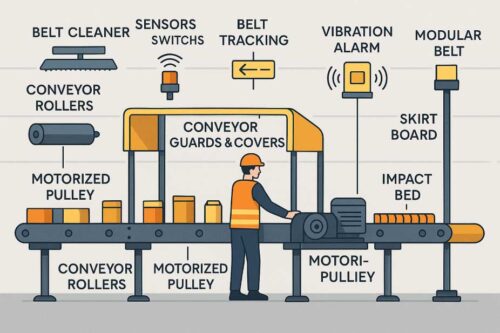
Before diving into the list, let’s clarify why these components are not optional:
-
🌟 Enhance safety: Prevents slippage, misalignment, and hazardous buildup.
-
⏱️ Increase efficiency: Minimizes downtime with automated features and preventive components.
-
💰 Lower costs: Reduces wear and energy waste, extending system life.
-
🛠️ Improve maintenance: Diagnostic tools and guards make troubleshooting easier and safer.
Whether you’re using belt conveyors, pallet handling conveyors, or automated conveyor systems, the right accessories complement your system for optimal results.
🔧 Top 10 Essential Conveyor Accessories You Should Know
1. Belt Cleaners (Scrapers)
-
Function: Removes excess material from the conveyor belt.
-
Why it matters: Prevents material buildup, reducing maintenance and improving cleanliness.
-
Use case: Cement plants, bulk material handling in mining and food industries.
2. Conveyor Guards & Covers
-
Function: Shields moving parts and keeps personnel safe.
-
Why it matters: OSHA compliance and accident prevention.
-
Use case: Any plant following industrial safety protocols.
3. Impact Beds and Bars
-
Function: Absorb shock at loading zones to protect belts and idlers.
-
Why it matters: Reduces belt damage and spillage.
-
Use case: Bulk loading zones, mining, construction aggregates.
4. Belt Tracking Devices
-
Function: Ensures the belt stays centered and aligned.
-
Why it matters: Prevents wear and system breakdowns.
-
Use case: Long-distance belt conveyors, curved layouts.
5. Conveyor Sensors and Switches
-
Function: Detect movement, alignment, load levels, and more.
-
Why it matters: Automates system diagnostics and safety shutoffs.
-
Use case: Smart manufacturing, automated factories.
6. Skirt Boards and Sealing Systems
-
Function: Prevents spillage at loading/unloading zones.
-
Why it matters: Reduces dust, waste, and product loss.
-
Use case: Cement, fertilizer, or grain handling lines.
-
Function: Support the belt and ensure smooth operation.
-
Why it matters: Lower friction, less energy, extended belt life.
-
Use case: Universal, especially in high-speed conveyors.
8. Motorized Drive Pulleys
-
Function: Drive the belt efficiently with enclosed motors.
-
Why it matters: Compact, energy-efficient, less maintenance.
-
Use case: Cleanroom or space-constrained environments.
9. Vibration and Misalignment Alarms
-
Function: Alert for abnormal operation.
-
Why it matters: Prevents major failures through early detection.
-
Use case: Facilities with remote or long conveyor runs.
10. Modular Belt Attachments
-
Function: Add features like side guards, bucket cleats, etc.
-
Why it matters: Customizable for specific product shapes or flow types.
-
Use case: Food processing, parcel handling, automotive.
🏭 Real-Life Use Case: ENTRA Electromechanical’s Accessory Integration
At ENTRA Electromechanical, the integration of accessories into their motorized conveyor systems ensures that their Egyptian and Middle Eastern clients experience minimum downtime and maximum efficiency.
A 2024 project in Al Obour involved customizing a belt conveyor system with:
The result? A 31% reduction in maintenance time and 20% fewer operational stoppages.
📦 Choosing the Right Accessories: A Procurement Checklist
| Requirement |
Suggested Accessory |
| High-speed flow |
Balanced rollers, alignment sensors |
| Dust-free environment |
Sealing systems, covers |
| Heavy impact zones |
Impact beds, reinforced frames |
| Food grade materials |
Stainless steel accessories, modular belts |
| Remote operation |
Sensors + smart alarms |
🔄 Integration Tips for Engineers
-
⚙️ Design with modularity: Choose plug-and-play accessories for future upgrades.
-
🧪 Test in stages: Add accessories incrementally to evaluate impact.
-
💡 Use smart tech: Integrate with PLCs and IoT for real-time monitoring.
-
📐 Account for load zones: Choose the right impact and sealing accessories at key transfer points.

by admin | Jul 27, 2025 | Blog
Table of Contents
-
Introduction
-
What Are Pallet Handling Conveyors?
-
Key Components of Pallet Handling Conveyor Systems
-
Types of Pallet Conveyors Used in Manufacturing
-
Benefits of Using Pallet Handling Conveyors
-
Industry Applications & Case Studies
-
How to Choose the Right Pallet Conveyor
-
Integration with Material Handling Equipment
-
Automation and Smart Features
-
Maintenance Tips for Longevity
-
Conclusion
-
Related Tags & Keywords
1. Introduction

In today’s high-paced manufacturing environments, efficiency and productivity are everything. One of the most overlooked but high-impact tools that manufacturers can deploy is pallet handling conveyors. These systems move heavy or bulky palletized goods efficiently, minimizing manual labor and reducing production delays.
Whether you’re a Plant Operations Manager, Procurement Officer, or Process Improvement Specialist, understanding how pallet conveyors contribute to lean operations is essential.
2. What Are Pallet Handling Conveyors?
Pallet handling conveyors are specialized material handling solutions designed to transport palletized loads smoothly through different stages of production or storage. Unlike standard conveyor systems, these are built to handle heavier loads and are typically reinforced with robust components.
Pallet conveyors are integral to:
They’re especially useful in automated conveyor systems where precision and load stability are critical.
3. Key Components of Pallet Handling Conveyor Systems
To perform reliably, pallet conveyors are composed of several important components:
-
Rollers or chains: For movement of the pallet
-
Frames and supports: Heavy-duty materials (steel or aluminum)
-
Drives and motors: Provide motion and control
-
Sensors and PLCs: For automation and tracking
-
Stops and accumulation zones: Ensure safety and flow control
These components work together to ensure smooth, uninterrupted transport.
4. Types of Pallet Conveyors Used in Manufacturing
Depending on the load, environment, and purpose, manufacturers use various types of pallet handling conveyors:
| Type |
Description |
Ideal Use |
| Chain-Driven Live Roller (CDLR) |
Uses chains to power rollers |
Heavy-duty applications |
| Drag Chain Conveyor |
Uses two or more parallel chains |
Pallets with inconsistent bottoms |
| Roller Conveyor |
Free or powered rollers |
Versatile and modular |
| Transfer Cars |
Move pallets across multiple conveyor lines |
Large-scale facilities |
| Turntables & Rotators |
Change direction of pallets |
Space-constrained areas |
5. Benefits of Using Pallet Handling Conveyors
The use of pallet handling conveyors provides manufacturers with tangible benefits:
✅ Increased Productivity
Reduces manual pallet movement and allows continuous production.
✅ Improved Safety
Limits manual lifting, reducing injuries and ergonomic risks.
✅ Higher Throughput
Fast and consistent movement across various departments or stations.
✅ Lower Labor Costs
Fewer workers needed to manually handle or transport pallets.
✅ Integration with Automation
Easily syncs with sensors, robotic arms, AGVs, and WMS.
6. Industry Applications & Case Studies
Used to transport stacked goods like bottled water or canned foods.
Handle heavy crates and engine blocks across assembly lines.
Ensures clean, traceable movement of bulk medication loads.
🔩 Heavy Manufacturing
ENTRA Electromechanical’s pallet conveyor solutions helped a Giza-based factory increase pallet movement speed by 45%, reducing turnaround time and enhancing inventory flow.
7. How to Choose the Right Pallet Conveyor
Here are key factors to consider:
-
Weight and size of your pallets
-
Speed requirements for throughput
-
Floor layout and space availability
-
Automation compatibility
-
Safety standards (ISO/CE compliance)
-
Material handling equipment used in conjunction
For example, if you’re working in tight areas with a 90-degree change in direction, a turntable or transfer cart may be ideal.
8. Integration with Material Handling Equipment
Pallet conveyors rarely operate alone. They work best when part of a complete material handling equipment ecosystem:
-
Forklifts and AGVs for loading/unloading
-
WMS software for tracking
-
Packaging machines for final stage processes
By integrating, manufacturers can reduce bottlenecks, ensure traceability, and achieve real-time monitoring.
9. Automation and Smart Features
Modern automated conveyor systems include features like:
These smart systems improve predictive maintenance and operational efficiency, reducing downtime by up to 60%.
10. Maintenance Tips for Longevity
Proper maintenance ensures your investment pays off for years. Here’s what to keep in mind:
-
Weekly checks on chain tension and alignment
-
Monthly lubrication of moving parts
-
Quarterly sensor calibration
-
Annual full-service inspections
Using ENTRA’s conveyor accessories (like anti-slip coatings or smart sensors) can extend lifespan and ensure safety compliance.
11. Conclusion
Pallet handling conveyors are a vital part of the modern manufacturing environment. From improved safety to enhanced automation, they bring a host of benefits that align with the goals of every industrial engineer, logistics manager, and plant supervisor.
When integrated with other material handling equipment, they become the backbone of lean production lines. Choosing a reliable partner like ENTRA Electromechanical ensures you get custom-built, durable, and scalable solutions tailored to your factory’s needs.

by admin | Jul 24, 2025 | Blog, Articles
Table of Contents
-
Introduction
-
What Are Industrial Conveyors?
-
Why Industrial Conveyors Are Essential in Manufacturing
-
Main Types of Industrial Conveyors
-
Belt Conveyors
-
Roller Conveyors
-
Chain Conveyors
-
Screw Conveyors
-
Overhead Conveyors
-
Pallet Conveyors
-
Key Benefits of Industrial Conveyor Systems
-
Selecting the Right Conveyor Type for Your Operation
-
Conveyor Applications by Industry
-
Safety and Maintenance Best Practices
-
Integration with Automation and Industry 4.0
-
Cost Considerations and ROI
-
Future Trends in Industrial Conveyor Technology
-
Conclusion
-
FAQs
1. Introduction

In fast-paced manufacturing environments, efficiency, safety, and automation are top priorities. One of the core systems driving these outcomes is the industrial conveyor. Whether it’s transporting parts across an assembly line or sorting packages in a distribution center, industrial conveyors play a critical role in productivity and plant performance.
In this guide, we’ll cover everything plant managers, engineers, and procurement teams need to know to make informed decisions about conveyor system investments.
2. What Are Industrial Conveyors?
Industrial conveyors are mechanical systems designed to move materials within manufacturing facilities, warehouses, and industrial plants. They provide continuous or intermittent movement, helping to reduce manual labor and optimize production flows.
3. Why Industrial Conveyors Are Essential in Manufacturing
🏭 Benefits for Operations Managers:
⚙️ Benefits for Engineers:
-
Consistent, controllable process integration
-
Compatibility with sensors and PLCs
-
Customizable to specific materials and workflows
💼 Benefits for Procurement:
4. Main Types of Industrial Conveyors
Choosing the right conveyor type depends on your materials, floor space, load requirements, and budget.
Keyword Target: Belt conveyors
Used to move light to medium-weight materials. Ideal for:
-
Packaging lines
-
Food and beverage
-
Electronics
Belt Materials: PVC, PU, rubber, modular plastic
Advantages: Quiet, versatile, easy to maintain
Perfect for boxed or flat-bottomed goods.
Types:
Use Cases: Warehouses, e-commerce, parcel sorting
🔹 Chain Conveyors
Best for heavy loads or environments with grease, moisture, or temperature extremes.
Industries: Automotive, steel plants, ceramics
Move granular or powder materials using a rotating screw.
Applications: Cement, chemicals, agriculture, food processing
Advantages: Dust-free movement, precise volume control
Maximize floor space by moving items above head height.
Use Cases: Paint shops, garment lines, auto parts assembly
Types: Enclosed track, I-beam, power-and-free
🔹 Pallet Conveyors
Keyword Target: Pallet handling conveyors
Built to transport heavy pallets safely and efficiently.
Conveyor Bases: Chain-driven live roller (CDLR), drag chain
Add-ons: Turntables, transfer carts, lift tables
5. Key Benefits of Industrial Conveyor Systems
✅ Speed and Efficiency
Moves products faster than manual transport, reducing cycle times.
✅ Labor Reduction
Eliminates repetitive or dangerous tasks.
✅ Increased Safety
Prevents lifting injuries and product damage.
✅ Continuous Operation
24/7 uptime in automated facilities.
✅ Scalability
Modular systems allow future expansion.
6. Selecting the Right Conveyor Type for Your Operation
Before buying or upgrading, ask these questions:
| Consideration |
Why It Matters |
| Load Weight |
Dictates motor size and frame material |
| Product Type |
Irregular vs. regular shapes |
| Throughput |
Required speed and volume |
| Plant Layout |
Available space and workflow |
| Environment |
Cleanroom, wet, hot, or corrosive? |
| Automation |
Need for sensors, PLCs, integration? |
Partnering with a specialist helps tailor the right system for your exact use case.
7. Conveyor Applications by Industry
Each sector has unique needs when it comes to industrial conveyors:
🛠️ Manufacturing
🚚 Logistics
-
Parcel sorting
-
Distribution hubs
-
E-commerce warehouses
🍞 Food & Beverage
🚗 Automotive
-
Engine block handling
-
Paint booths
-
Chassis assembly
🧪 Chemicals & Pharmaceuticals
8. Safety and Maintenance Best Practices
A well-designed conveyor system is only as effective as its safety and maintenance plan.
🔒 Safety Essentials:
-
Emergency stop switches
-
Guard rails
-
Belt tracking sensors
-
Operator training
🔧 Maintenance Tips:
-
Lubricate moving parts regularly
-
Inspect belts and chains for wear
-
Keep sensors clean and calibrated
-
Maintain a stock of key spare parts
9. Integration with Automation and Industry 4.0
Modern factories demand intelligent, connected conveyor systems.
Smart Features:
-
Sensors to detect jams, overloads, or empty lanes
-
PLCs and SCADA systems for control and feedback
-
Integration with ERP, WMS, and robotics
Automated conveyor systems are now standard for plants adopting Industry 4.0 and smart manufacturing frameworks.
10. Cost Considerations and ROI
Initial Costs:
-
Base conveyor frame and motor
-
Sensors, controls, and accessories
-
Installation and layout design
Operational Costs:
ROI Drivers:
-
Labor savings
-
Increased output
-
Fewer product damages
-
Reduced lead times
Most facilities see payback within 12–24 months depending on usage and automation level.
11. Future Trends in Industrial Conveyor Technology
As factories evolve, conveyor systems are getting smarter, safer, and more sustainable.
🌐 IoT & Predictive Maintenance
-
Real-time alerts for jams, slippage, or overload
-
Remote monitoring dashboards
🧠 AI & Machine Learning
♻️ Sustainability
🤖 Cobots and AMRs
12. Conclusion
Whether you’re expanding your production line or starting from scratch, industrial conveyors are the foundation for efficient material handling.
By understanding conveyor types, selecting based on your process needs, and maintaining safety standards, you’ll ensure maximum uptime, productivity, and long-term ROI.
If you’re looking to reduce manual labor, increase speed, and future-proof your plant, investing in the right conveyor system is the next smart move.
13. Frequently Asked Questions (FAQs)
Q1: Which type of industrial conveyor is best for my factory?
A: It depends on your materials, weight, speed, and floor space. Belt conveyors are common for general use, while chain or pallet conveyors are ideal for heavy-duty operations.
Q2: How often should conveyors be maintained?
A: At minimum, conduct monthly inspections. High-use facilities may need weekly or even daily checks.
Q3: Are industrial conveyors customizable?
A: Yes! They can be custom-fit for size, shape, material, layout, and level of automation.
Q4: What’s the difference between an industrial and a commercial conveyor?
A: Industrial conveyors are designed for high-duty, long-term use in factories; commercial systems are typically lighter-duty for retail or light warehouse use.
by admin | Jul 23, 2025 | Blog
Table of Contents
-
Introduction
-
What Is Material Handling Equipment?
-
Types of Material Handling Equipment Used in Manufacturing
-
Conveyors
-
Lifting Equipment
-
Storage Systems
-
Industrial Trucks
-
The Link Between Material Handling and Plant Efficiency
-
Benefits of Investing in the Right Equipment
-
Common Inefficiencies Caused by Poor Handling Systems
-
Key Selection Criteria for Efficient Material Handling
-
How Material Handling Supports Lean Manufacturing
-
Real-World Application: Efficiency Boost in a Mid-Sized Factory
-
Maintenance and Lifecycle Optimization
-
Future Trends in Material Handling Equipment
-
Conclusion
-
FAQs
1. Introduction
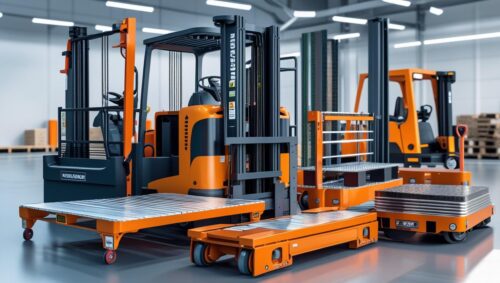
As global competition increases, manufacturers are under pressure to maximize productivity while cutting costs. One of the most overlooked ways to achieve this is through effective material handling equipment.
From automated conveyors to ergonomic lifting systems, having the right tools in place directly impacts plant efficiency, safety, and output quality. This guide explores how modern handling systems create smarter, more efficient production lines.
2. What Is Material Handling Equipment?
Material handling equipment refers to the mechanical systems and tools used to move, protect, store, and control materials throughout the manufacturing process.
This includes:
-
Raw material intake
-
In-process handling
-
Storage
-
Packaging
-
Distribution
Efficient handling reduces manual intervention, accelerates production time, and minimizes material damage or loss.
3. Types of Material Handling Equipment Used in Manufacturing
Let’s break down the major categories used in industrial settings:
🔹 Conveyor Systems
Related Keyword: Conveyor systems
Automated conveyors move materials efficiently across production zones. Types include belt conveyors, pallet handling conveyors, and automated conveyor systems.
Use Case: Assembly lines, packaging stations, distribution hubs.
🔹 Lifting Equipment
Includes hoists, cranes, and robotic arms.
Function: Move heavy items safely and reduce worker strain.
Industries: Automotive, aerospace, heavy machinery.
🔹 Storage Systems
Racking, shelving, and automated storage and retrieval systems (ASRS) fall under this category.
Goal: Optimize warehouse space and improve material access speed.
🔹 Industrial Trucks
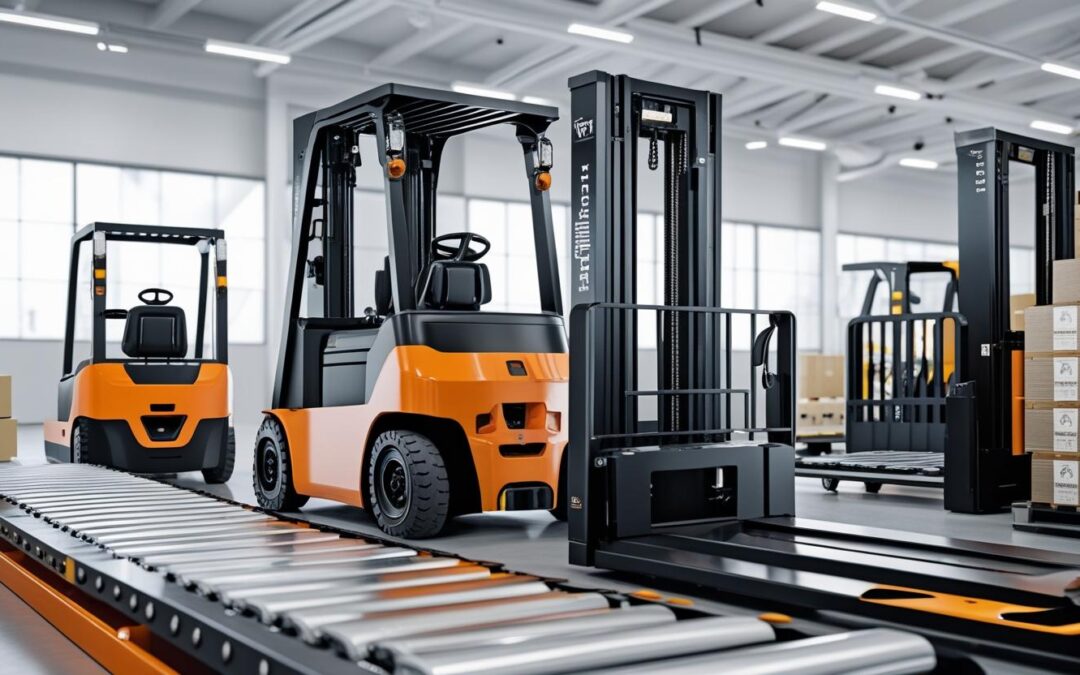
Forklifts, pallet jacks, and automated guided vehicles (AGVs) are used for moving materials within a facility.
4. The Link Between Material Handling and Plant Efficiency
Here’s how material handling equipment directly improves plant operations:
| Efficiency Factor |
Impact of Good Material Handling |
| ✅ Time |
Shorter transit and loading times |
| ✅ Labor |
Less manual work, fewer injuries |
| ✅ Space |
Better layout utilization |
| ✅ Inventory |
Fewer losses and damages |
| ✅ Production Flow |
Smoother process with less downtime |
Automated handling systems cut non-value-added time and enable consistent throughput.
5. Benefits of Investing in the Right Equipment
If you’re a plant manager or procurement officer, here’s why investing in the right material handling equipment matters:
✅ Increased Output
Faster material movement = higher production rates.
✅ Reduced Downtime
Fewer equipment jams and less reliance on human handling.
✅ Improved Safety
Minimized risk of injuries from lifting, tripping, or product drops.
✅ Better Product Quality
Reduces damage from poor handling or storage.
✅ Cost Savings
Lower labor costs, maintenance, and operational delays.
6. Common Inefficiencies Caused by Poor Handling Systems
Here are the signs that your current system is holding you back:
-
Frequent machine stops due to material unavailability
-
Long worker transit paths
-
High accident or injury rates
-
Overstocking or underutilization of space
-
Missed production deadlines
These inefficiencies lead to higher operating costs and customer dissatisfaction.
7. Key Selection Criteria for Efficient Material Handling
Not all equipment is created equal. Your selection should be based on:
| Factor |
Why It Matters |
| Load Type |
Size, shape, fragility of materials |
| Volume |
Daily throughput affects design and specs |
| Space |
Equipment must fit your facility layout |
| Process Integration |
Must work with existing systems like ERP |
| Safety Standards |
Must meet local and international guidelines |
| Flexibility |
Modularity allows future expansion or reconfiguration |
Working with experienced providers helps tailor the equipment to your specific needs.
8. How Material Handling Supports Lean Manufacturing
Lean principles aim to eliminate waste—material handling systems are core to this.
Here’s how:
| Lean Waste Type |
Solution via Handling Equipment |
| Transport Waste |
Use conveyors for flow efficiency |
| Waiting Time |
Automate loading/unloading |
| Motion Waste |
Reduce manual travel distances |
| Inventory Waste |
ASRS systems manage space |
| Defects |
Gentle handling reduces breakage |
By aligning handling systems with Lean, you improve efficiency without major capital investment.
9. Real-World Application: Efficiency Boost in a Mid-Sized Factory
🏢 Client: Local FMCG Manufacturer – 2024 Upgrade
Challenge: Manual movement of heavy boxes caused injuries and process delays.
Solution: Introduced belt conveyors, ergonomic lifts, and automated storage.
Results:
-
50% faster material flow
-
35% reduction in labor cost
-
70% fewer material damage reports
-
Payback period: 14 months
Insight: Even a modest investment in material handling equipment had massive ROI.
10. Maintenance and Lifecycle Optimization
To maximize ROI, focus on equipment maintenance and lifecycle planning:
🔧 Preventive Maintenance
Regular checks reduce breakdowns and costly downtime.
📊 Monitoring Tools
Modern systems provide performance data for predictive servicing.
🛠 Spare Parts Planning
Work with suppliers to ensure critical spares availability.
🔄 Upgradability
Choose systems that allow software and hardware expansion.
🔹 AI Integration
-
Work alongside humans in hybrid workflows
-
Ideal for packing, sorting, and loading
🔹 IoT-Enabled Equipment
🔹 Green Handling Systems
Future factories will rely on these innovations to remain competitive and sustainable.
12. Conclusion
Whether you run a small plant or a large industrial facility, upgrading your material handling equipment is one of the most effective ways to boost efficiency, safety, and profitability.
From conveyors to robotic lifts, every piece of equipment should serve your goal: smarter, faster, leaner production.
Investing now not only helps solve today’s problems—it future-proofs your operations.
13. Frequently Asked Questions (FAQs)
Q1: What is the ROI of upgrading material handling equipment?
A: Most upgrades pay for themselves within 12–24 months via increased throughput, reduced labor, and lower downtime.
Q2: How do I know which type of equipment I need?
A: Start with a process audit. Consider materials, space, volume, and integration with your current system.
Q3: Can handling equipment be integrated with my ERP or MES system?
A: Yes, many systems support API or PLC-based integration for real-time monitoring and control.
Q4: What is the most common mistake in material handling design?
A: Designing around equipment instead of the workflow. Always focus on process first, then select equipment to match.