
Packaged product flow
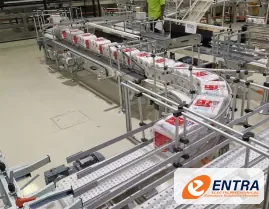
Convey bottles, packs, cartons or components where chain width, surface and transfer geometry match the product.
Modular chain conveying
Modular plastic-chain conveyor platforms for compact product handling, straight runs, curves and engineered line layouts.
Overview
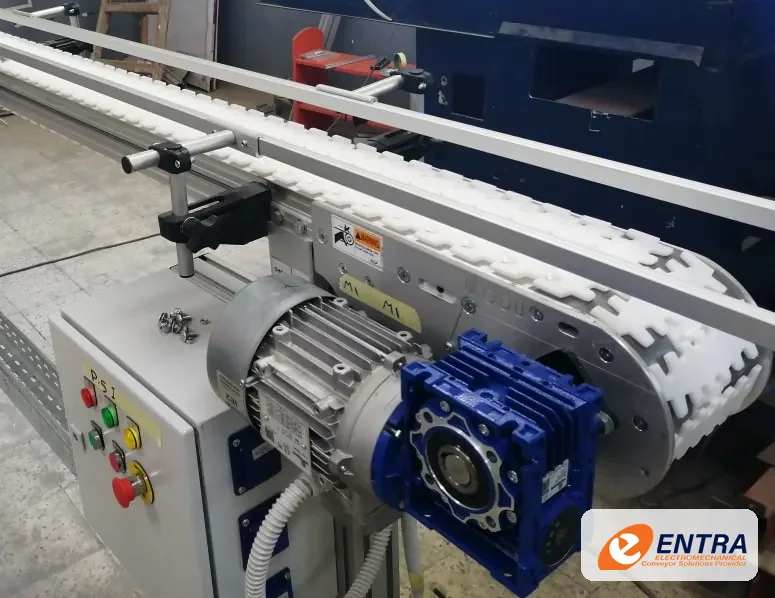
MODU plastic-chain systems use modular links running over compatible wear strips and support profiles. The V22 catalogue identifies aluminium plastic-chain families MP, MS3, MM3, ML2 and MX2, plastic-belt families MT2, MR2 and MF2, pallet families and stainless families. Select the family and polymer only after checking product, duty and environment.
Convey bottles, packs, cartons or components where chain width, surface and transfer geometry match the product.
Use compatible chain and guide arrangements to route product around production equipment.
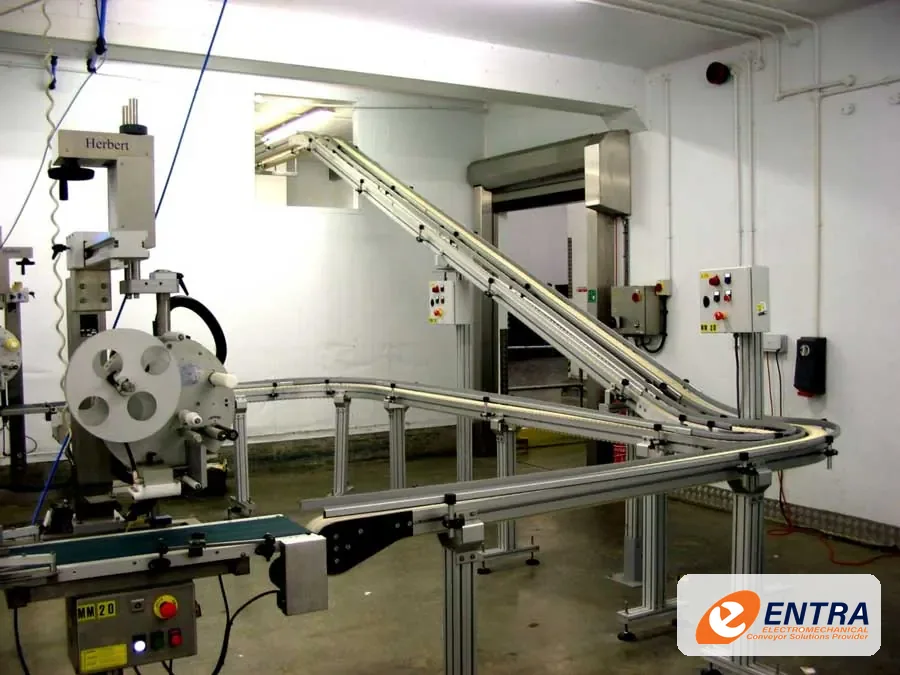
Connect workstations, filling, labelling, inspection and packing operations.
Use the catalogue pallet families only with a design matched to carrier geometry and loading.
Operating principle
MODU plastic-chain systems use modular links running over compatible wear strips and support profiles. The V22 catalogue identifies aluminium plastic-chain families MP, MS3, MM3, ML2 and MX2, plastic-belt families MT2, MR2 and MF2, pallet families and stainless families. Select the family and polymer only after checking product, duty and environment.
A simplified illustration of the motion — not to scale and not a performance simulation.
Available configurations
MODU MP, MS3, MM3, ML2 and MX2 catalogue families, selected by width and layout.
MT2, MR2 and MF2 families as catalogued; belt construction and duty must be confirmed.
MP, MM3, ML2 and MDP pallet families, selected for carrier and load geometry.
DS3, DM3, DL2, DX2, DT2, DR2 and DF2 as listed in the V22 catalogue.
Technical design basis
These items identify the information used to engineer this equipment. Numerical limits appear only where the referenced catalogue supports them; other values are confirmed for each project.
Numerical values above are transcribed from the supplied MODU Product Catalogue V22 technical reference for POM chain. PP chain data differ. These catalogue reference values are not an application approval; confirm exact material, duty, load, temperature, speed, layout and series with ENTRA. Catalogue family page references are recorded in MODU-CATALOGUE-V22-REFERENCE.md.
| MODU MP (POM) | 35 mm chain width; 2,000 N tensile strength at 20°C; 500 N maximum working tension; 5–40 m/min recommended speed; 150 mm minimum radius; 25.4 mm pitch; -10 to +60°C; max length 20 m layout-dependent. |
|---|---|
| MODU MS3 (POM) | 63 mm chain width; 3,000 N tensile strength at 20°C; 700 N maximum working tension; 5–50 m/min; 150 mm minimum radius; 25.4 mm pitch; -10 to +60°C; max length 30 m layout-dependent. |
| MODU MM3 (POM) | 83 mm chain width; 4,000 N tensile strength at 20°C; 1,000 N maximum working tension; 5–50 m/min; 160 mm minimum radius; 33.5 mm pitch; -10 to +60°C; max length 30 m layout-dependent. |
| MODU ML2 (POM) | 140 mm chain width; 5,000 N tensile strength at 20°C; 1,200 N maximum working tension; 5–50 m/min; 200 mm minimum radius; 44.5 mm pitch; -10 to +60°C; max length 30 m layout-dependent. |
| MODU MX2 (POM) | 220 mm chain width; 5,000 N tensile strength at 20°C; 1,200 N maximum working tension; 5–50 m/min; 500 mm minimum radius; 44.5 mm pitch; -10 to +60°C; max length 30 m layout-dependent. |
Engineering considerations
A useful proposal starts with operating conditions and interfaces. Final sizing is confirmed by engineering review.
Confirm MP, MS3, MM3, ML2, MX2 or the relevant belt/pallet family; distinguish POM from PP and other material variants.
Product footprint, mass, contact surface, stability, spacing, accumulation and transfer requirements.
Straight and curved sections, chain width, minimum radius, return path, supports and transfer details.
Temperature, cleaning, chemicals, wear, speed, operating hours, drive and maintenance conditions.
Photographs
Captions identify the equipment shown; a photo is not a claim that every image is a completed installation of the exact configuration described.
ENTRA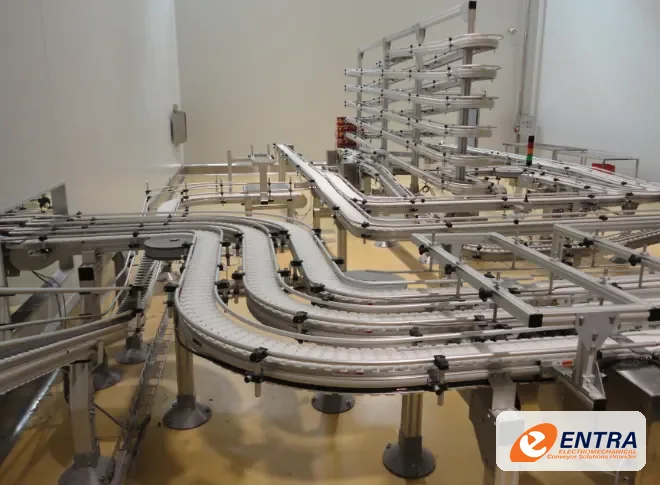 ENTRA
 ENTRA
 ENTRA
Related equipment
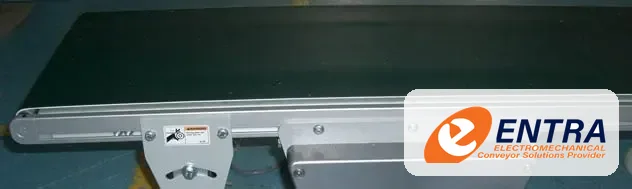
Continuous belt transport for cartons, cases, packaged products and suitable unit loads across production, pa…
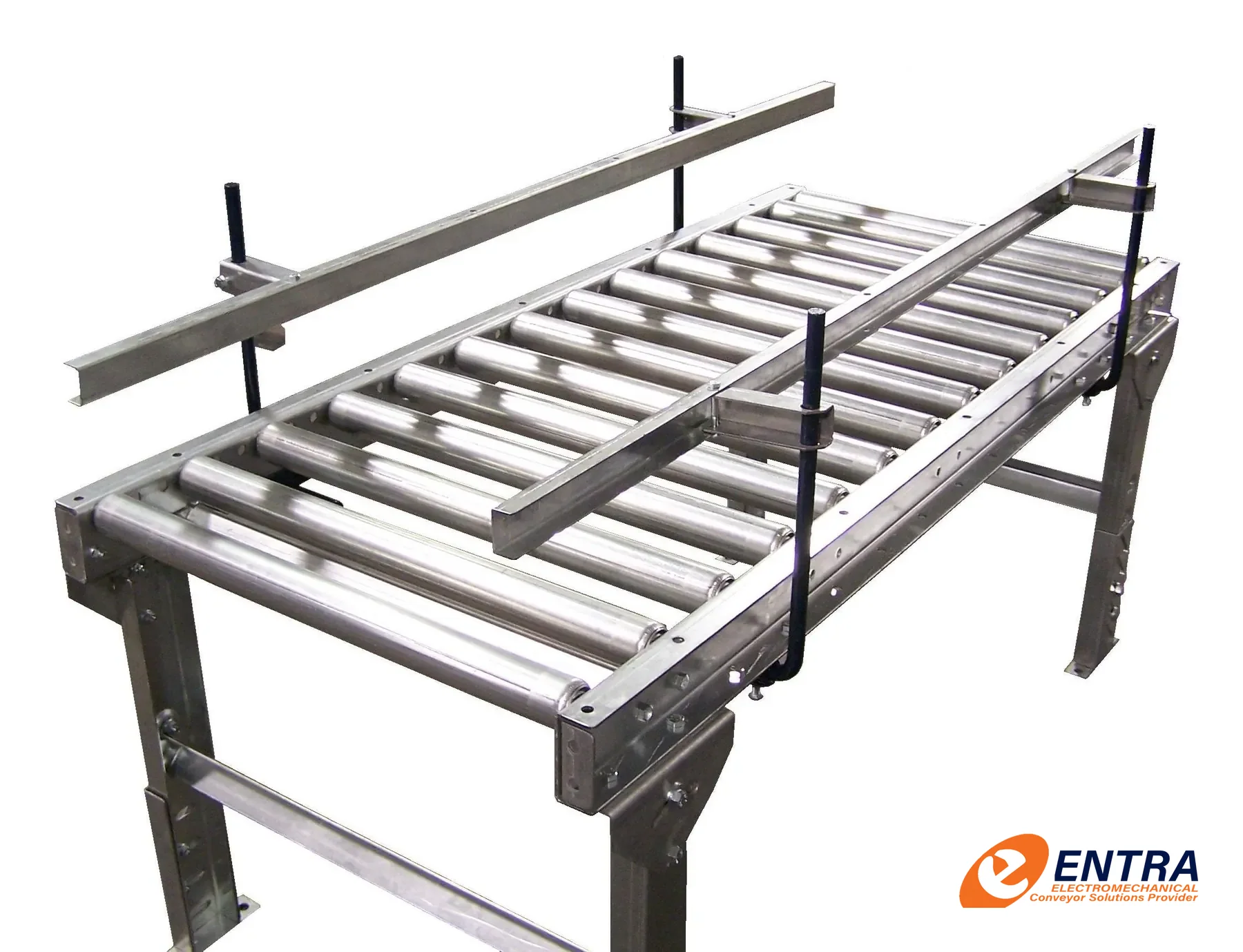
Gravity and powered roller conveyor arrangements for conveying, accumulation, transfer and distribution of co…
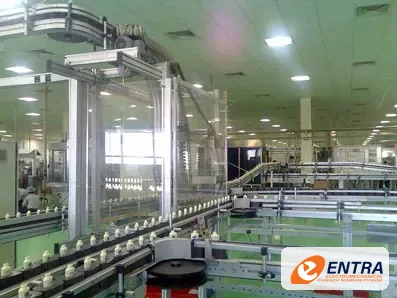
Aluminium-profile conveyor frames and modular structures for production, assembly, inspection and material-tr…
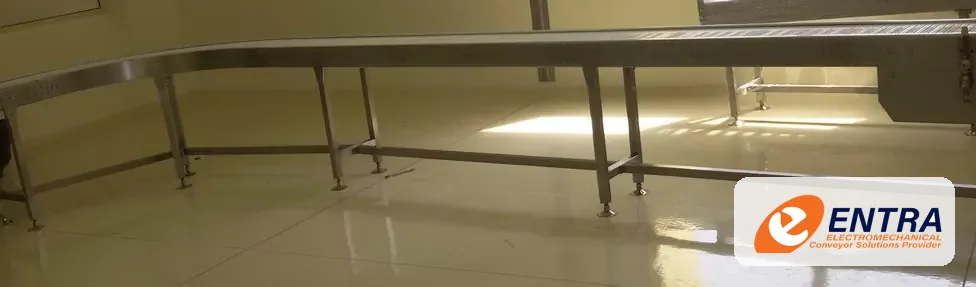
Stainless conveyor structures and conveying arrangements designed around defined product-contact, cleaning an…
Request a quotation
Share the product, the layout and what the line has to do. An ENTRA engineer reviews every enquiry and replies with questions or a proposal.
