
Powders and fine materials
Transfer suitable flour, mineral powders, additives and other free-flowing or conditioned fine materials in an enclosed conveying path.
Enclosed bulk material handling
Meter, feed and transfer powders, granules and suitable bulk solids using a rotating helical flight in a trough or tube.
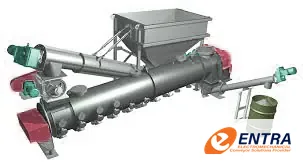
Overview
A screw conveyor moves bulk material along a casing by rotating a helical flight around a shaft—or by using a shaftless spiral in suitable applications. It can provide horizontal or inclined conveying, controlled feeding and transfer between process stages. Selection depends heavily on the material properties and the required duty.
Transfer suitable flour, mineral powders, additives and other free-flowing or conditioned fine materials in an enclosed conveying path.
Move suitable plastic pellets, grains, seeds and granular products between storage, dosing and process equipment.
Use a screw feeder or variable-speed drive to support controlled feeding where the material and required accuracy permit.
Connect hoppers, silos, mixers, bagging equipment and production machinery with horizontal or inclined screw arrangements.
Operating principle
A screw conveyor moves bulk material along a casing by rotating a helical flight around a shaft—or by using a shaftless spiral in suitable applications. It can provide horizontal or inclined conveying, controlled feeding and transfer between process stages. Selection depends heavily on the material properties and the required duty.
A simplified illustration of the motion — not to scale and not a performance simulation.
Available configurations
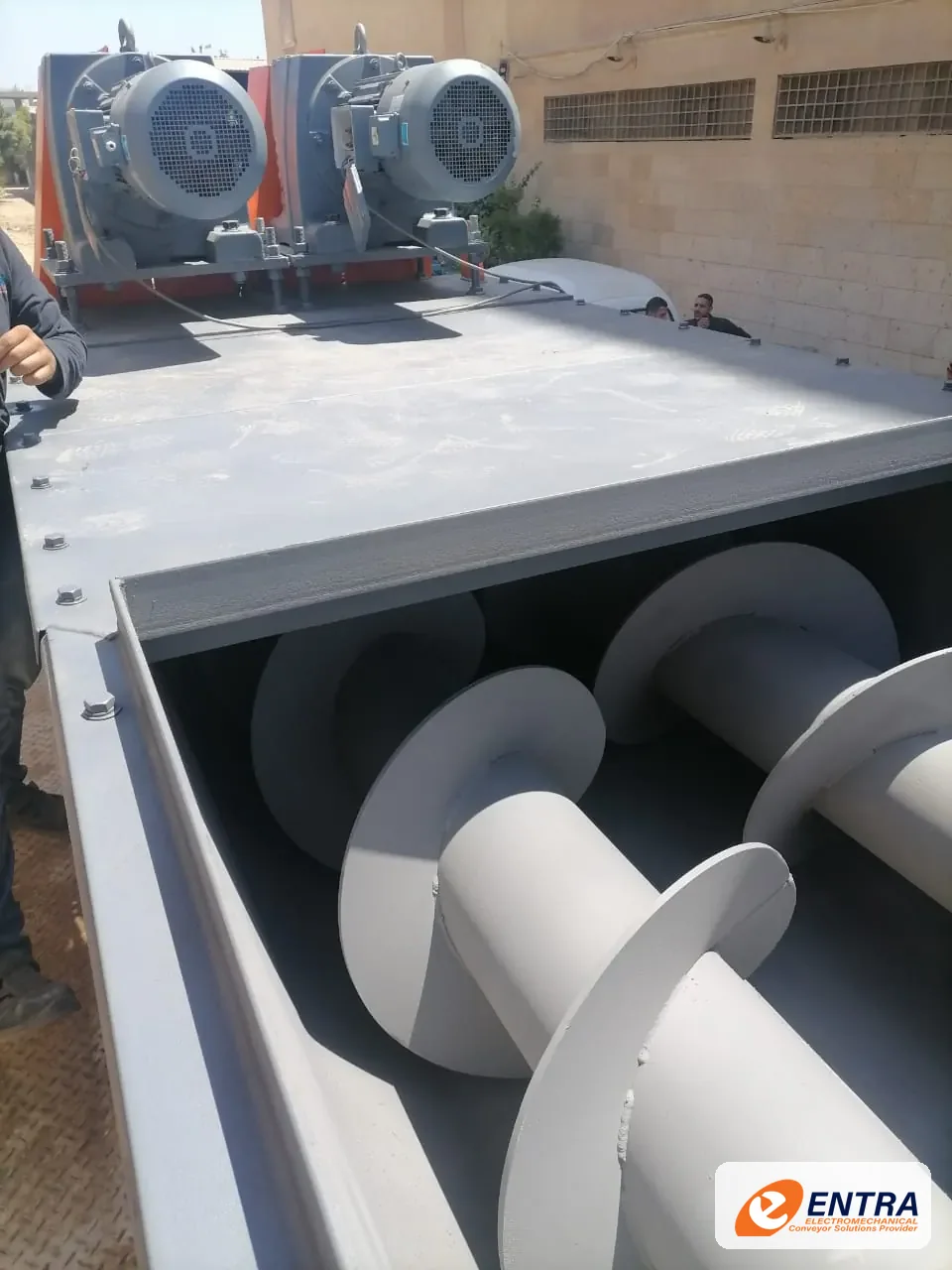
Openable or covered trough arrangement for accessible process and bulk transfer duties.
Enclosed tube arrangement where containment and routing requirements favour a tubular casing.
Hopper-mounted feeding arrangement designed around material flow and required discharge control.
Parallel screw configuration for selected feeding, mixing or difficult-flow applications after process review.
Technical design basis
These items identify the information used to engineer this equipment. Numerical limits appear only where the referenced catalogue supports them; other values are confirmed for each project.
Screw conveyor capacity is not inferred from diameter alone. It depends on material bulk density and flow behaviour, flight geometry, pitch, speed, fill ratio, inclination and duty. Abrasive, sticky, hot, combustible or food-contact materials require specific material, sealing, guarding and process review.
| Material bulk density | Measured or supplied bulk density and its variation during operation. |
|---|---|
| Particle and flow behaviour | Particle size, cohesion, moisture, abrasiveness, temperature and tendency to bridge. |
| Screw geometry | Flight diameter, pitch, shaft/shaftless design, trough or tube and fill ratio. |
| Duty and inclination | Mass/volume flow, conveying length, inclination, start-up and operating hours. |
| Wear and containment | Liners, seals, bearings, cleanout, dust containment and material compatibility. |
Engineering considerations
A useful proposal starts with operating conditions and interfaces. Final sizing is confirmed by engineering review.
Bulk density, particle size and distribution, flowability, moisture, temperature, abrasiveness, corrosiveness and tendency to bridge or compact.
Required mass or volumetric rate, operating hours, conveying length, inclination, fill level, start-up condition and upstream/downstream equipment.
Shafted or shaftless design, flight profile, pitch, diameter, trough or tube, cover, liners, cleanout points and material of construction.
Drive location, torque duty, bearing arrangement, seals, access, inspection, wear parts and maintenance clearance.
Photographs
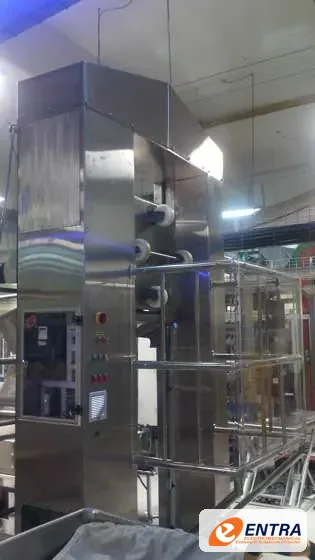
Captions identify the equipment shown; a photo is not a claim that every image is a completed installation of the exact configuration described.
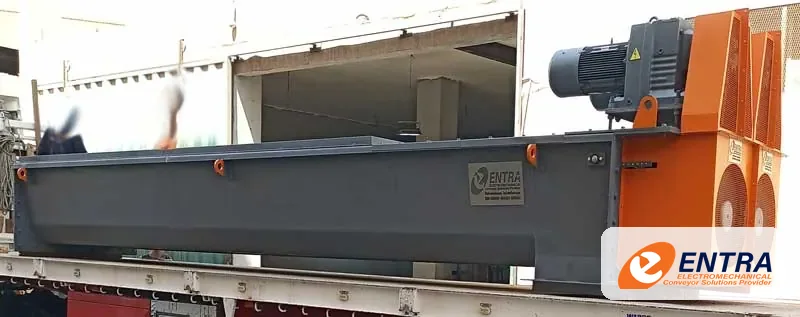 ENTRA
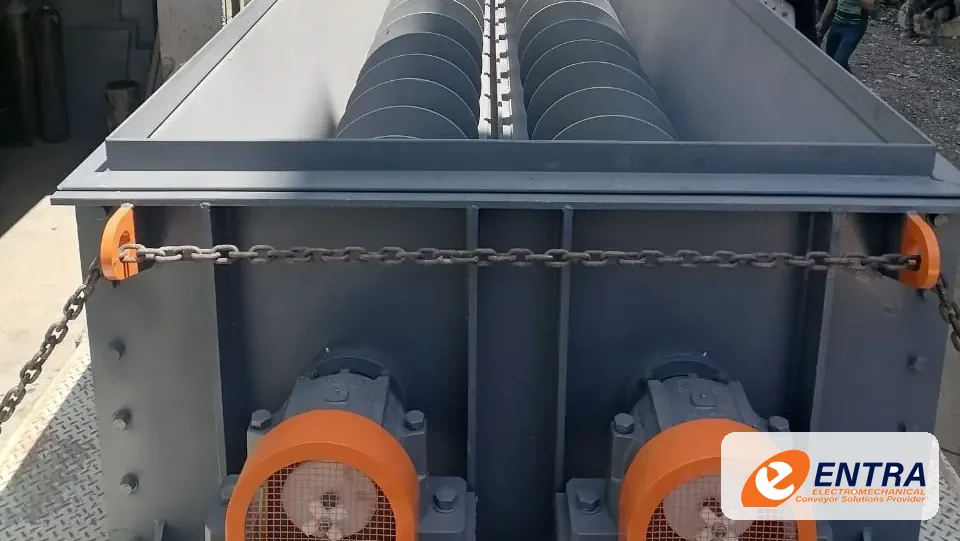 ENTRA
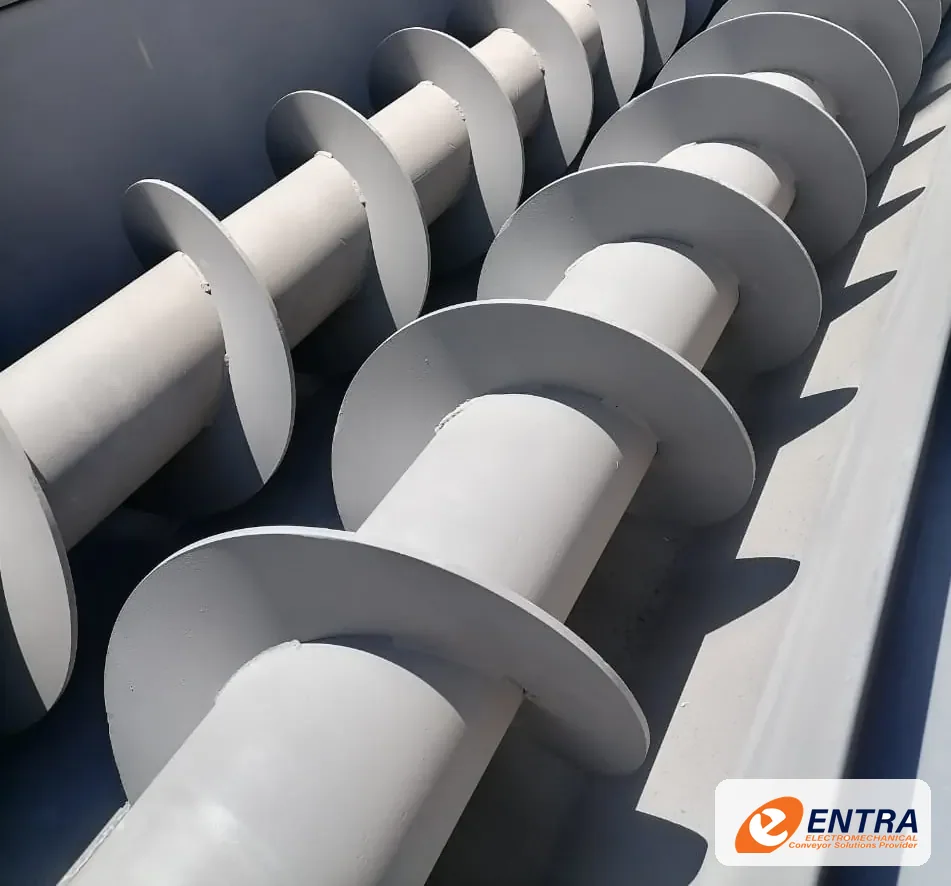 ENTRA
 ENTRA
Related equipment
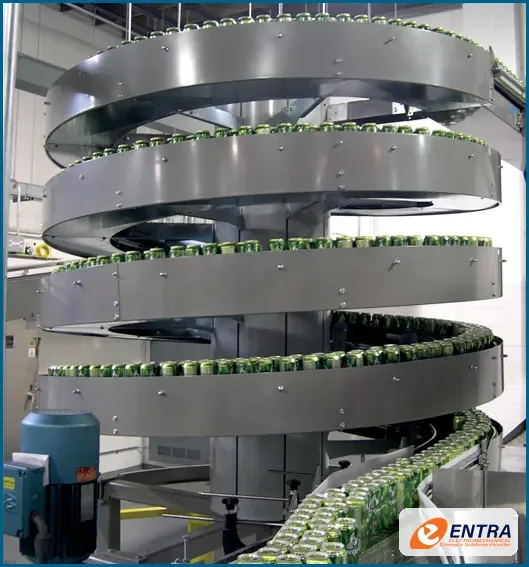
Continuous vertical conveying for production lines that need elevation, accumulation or controlled cooling wi…
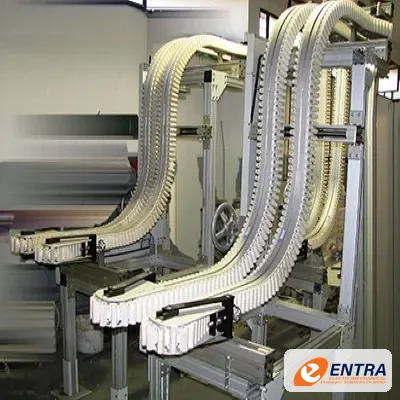
Opposed gripping belts hold suitable products at their sides to move them vertically, invert them or connect …
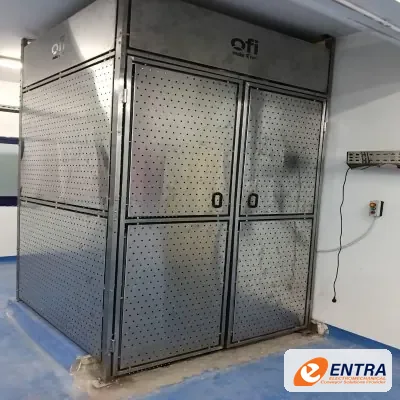
Purpose-designed vertical transfer equipment for moving compatible products or loads between conveyor levels.
Engineered stations for controlled tipping, tilting or reorientation of compatible products, containers and l…
Request a quotation
Share the product, the layout and what the line has to do. An ENTRA engineer reviews every enquiry and replies with questions or a proposal.
