
Food and beverage
Convey compatible packaged or process products in environments with defined cleaning and sanitation needs.
Process and hygienic environments
Stainless conveyor structures and conveying arrangements designed around defined product-contact, cleaning and process-environment requirements.
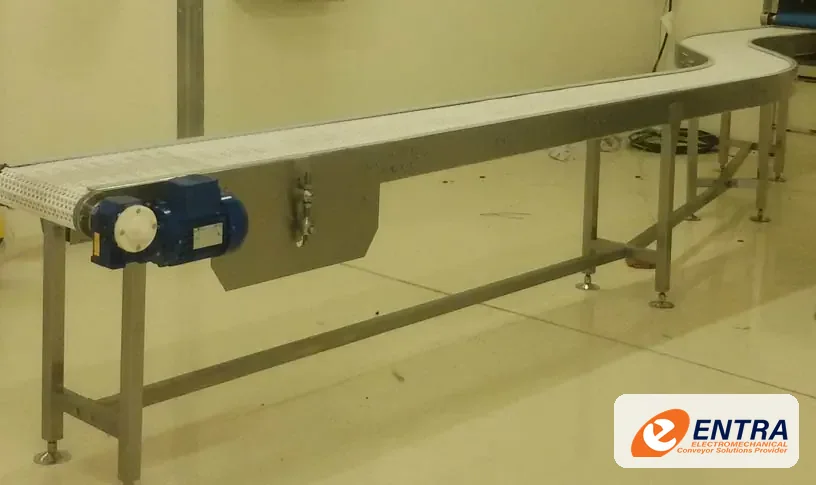
Overview
Stainless-steel conveyors are selected where corrosion resistance, cleaning access, product-contact requirements or process conditions call for stainless construction. Stainless steel alone does not make a conveyor hygienic: geometry, weld finish, drainage, seals, bearings, belt materials and cleaning procedures all matter.
Convey compatible packaged or process products in environments with defined cleaning and sanitation needs.
Support controlled product transfer where materials, cleanability and documentation are specified by the process owner.
Use suitable construction details and components where washdown is part of the operating procedure.
Select grade, finish and non-metallic components against the actual chemical exposure.
Operating principle
Stainless-steel conveyors are selected where corrosion resistance, cleaning access, product-contact requirements or process conditions call for stainless construction. Stainless steel alone does not make a conveyor hygienic: geometry, weld finish, drainage, seals, bearings, belt materials and cleaning procedures all matter.
A simplified illustration of the motion — not to scale and not a performance simulation.
Available configurations
Belt conveying with stainless structure and selected product-contact materials.
Plastic-chain conveying on stainless support and frame construction.
Roller bed and frame designed for the required process environment.
Application-specific frame, guards, drains, supports and interfaces.
Technical design basis
These items identify the information used to engineer this equipment. Numerical limits appear only where the referenced catalogue supports them; other values are confirmed for each project.
No GMP, FDA, IP, ATEX or other compliance claim is implied. Customer standards and required documentation must be identified and reviewed for the specific project.
| Stainless grade | Selected from corrosion exposure and cleaning chemistry; grade is not assumed. |
|---|---|
| Surface finish & welds | Specified for cleanability, product-contact requirements and customer acceptance criteria. |
| Cleaning regime | Water, foam, chemical concentration, temperature, pressure and frequency defined by the user. |
| Seals & components | Bearings, motors, fasteners, belts and feet checked for the same environment. |
Engineering considerations
A useful proposal starts with operating conditions and interfaces. Final sizing is confirmed by engineering review.
Specify stainless grade from chloride exposure, cleaning chemistry, product contact and corrosion risk.
Review open profiles, hollow sections, welds, crevices, drainage, surface finish and accessibility.
Belt or chain material, bearings, seals, motors, feet and fasteners must suit the cleaning regime.
Define applicable customer standards and regulatory requirements; do not assume certification from stainless construction alone.
Photographs
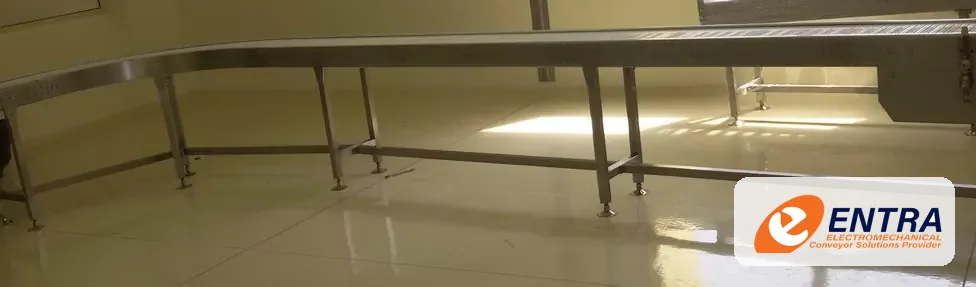
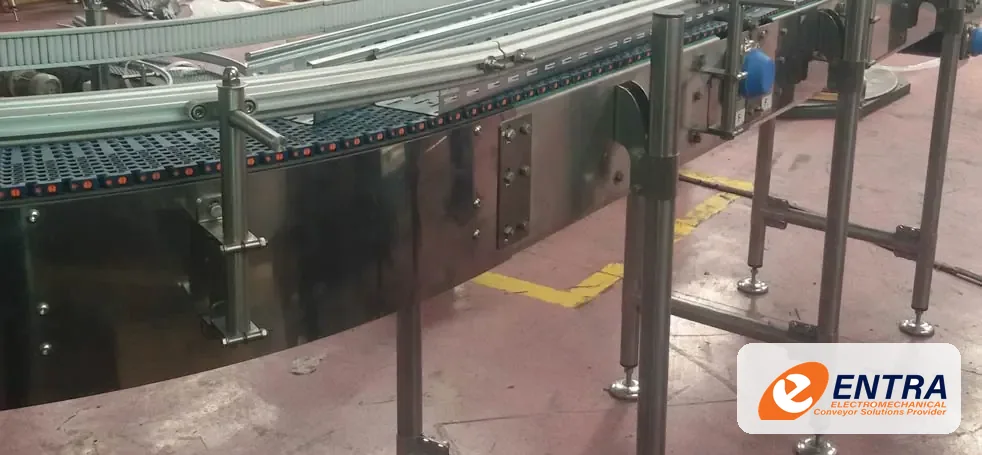
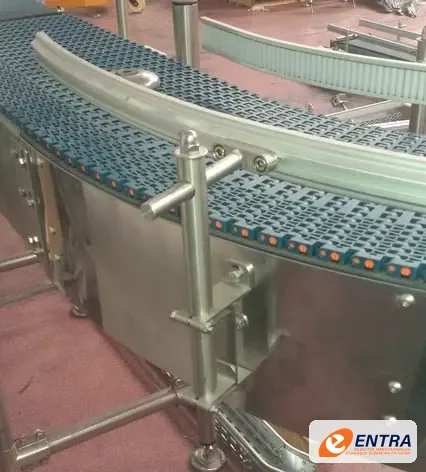
Captions identify the equipment shown; a photo is not a claim that every image is a completed installation of the exact configuration described.
 ENTRA
ENTRA
 ENTRA
 ENTRA
Related equipment
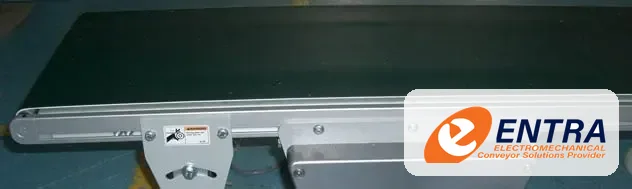
Continuous belt transport for cartons, cases, packaged products and suitable unit loads across production, pa…
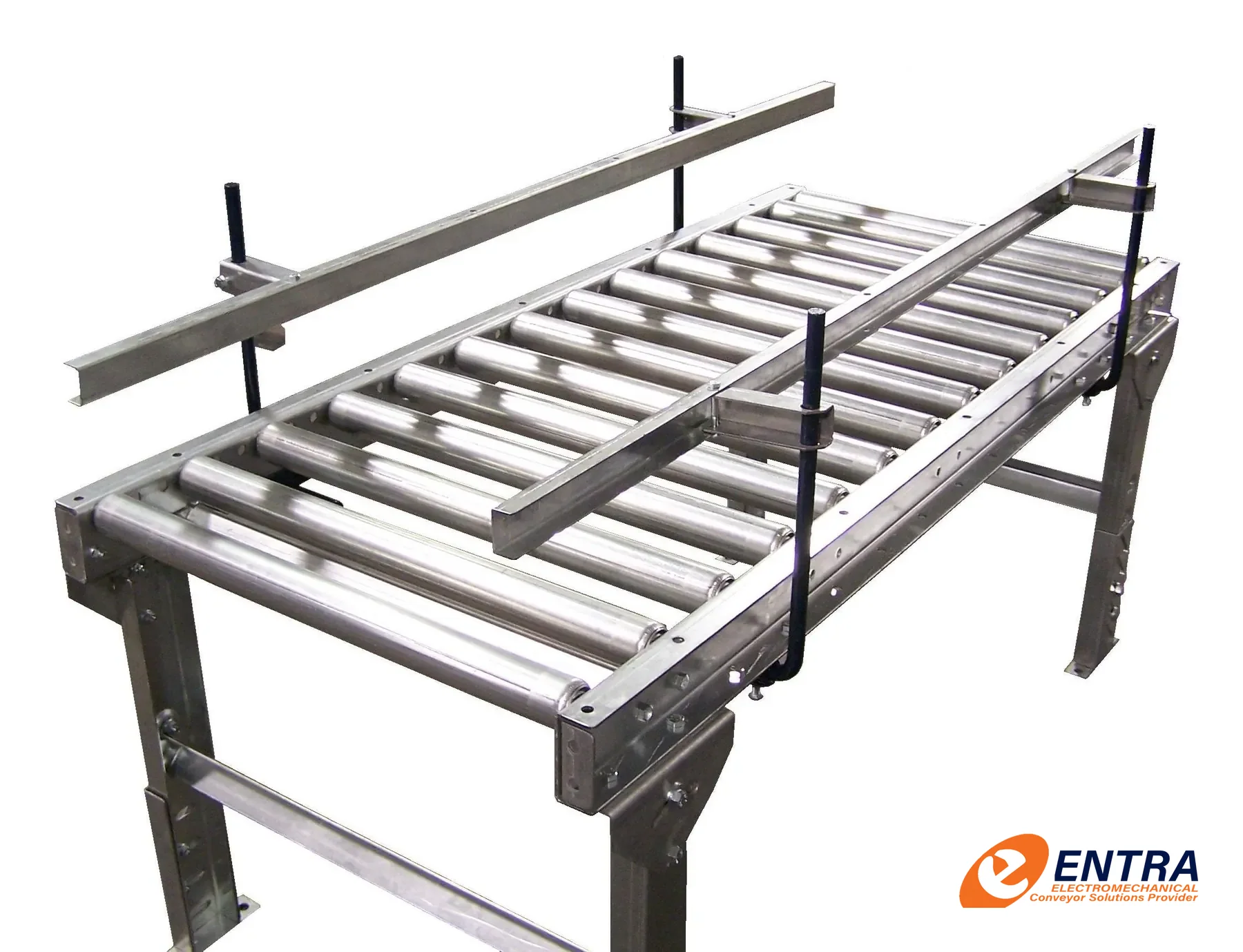
Gravity and powered roller conveyor arrangements for conveying, accumulation, transfer and distribution of co…
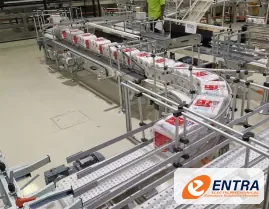
Modular plastic-chain conveyor platforms for compact product handling, straight runs, curves and engineered l…
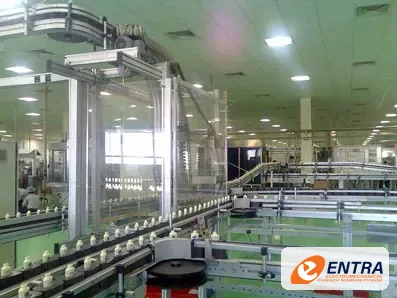
Aluminium-profile conveyor frames and modular structures for production, assembly, inspection and material-tr…
Request a quotation
Share the product, the layout and what the line has to do. An ENTRA engineer reviews every enquiry and replies with questions or a proposal.
