
Assembly workstations
Provide modular conveyor sections alongside manual or automated assembly processes.
Modular frame construction
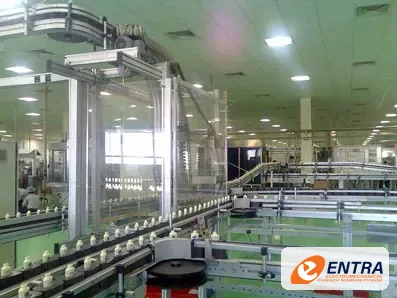
Aluminium-profile conveyor frames and modular structures for production, assembly, inspection and material-transfer stations.
Overview
Aluminium-profile conveyors use modular extruded profiles and compatible brackets, supports and guarding to create configurable conveyor frames. The conveying medium may be selected separately—such as belt or modular chain—so frame material alone does not define the conveyor’s load or performance.
Provide modular conveyor sections alongside manual or automated assembly processes.
Support product movement through checking, testing and quality-control stations.
Connect compact machines and work cells with configurable frame and transfer sections.
Use modular construction where future adjustment, guarding or accessory mounting is important.
Operating principle
Aluminium-profile conveyors use modular extruded profiles and compatible brackets, supports and guarding to create configurable conveyor frames. The conveying medium may be selected separately—such as belt or modular chain—so frame material alone does not define the conveyor’s load or performance.
A simplified illustration of the motion — not to scale and not a performance simulation.
Available configurations
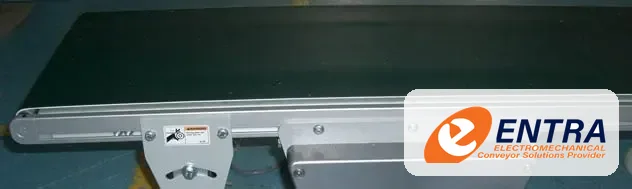
Aluminium profile structure with a separately selected belt and drive arrangement.
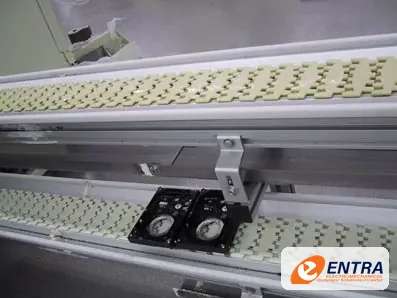
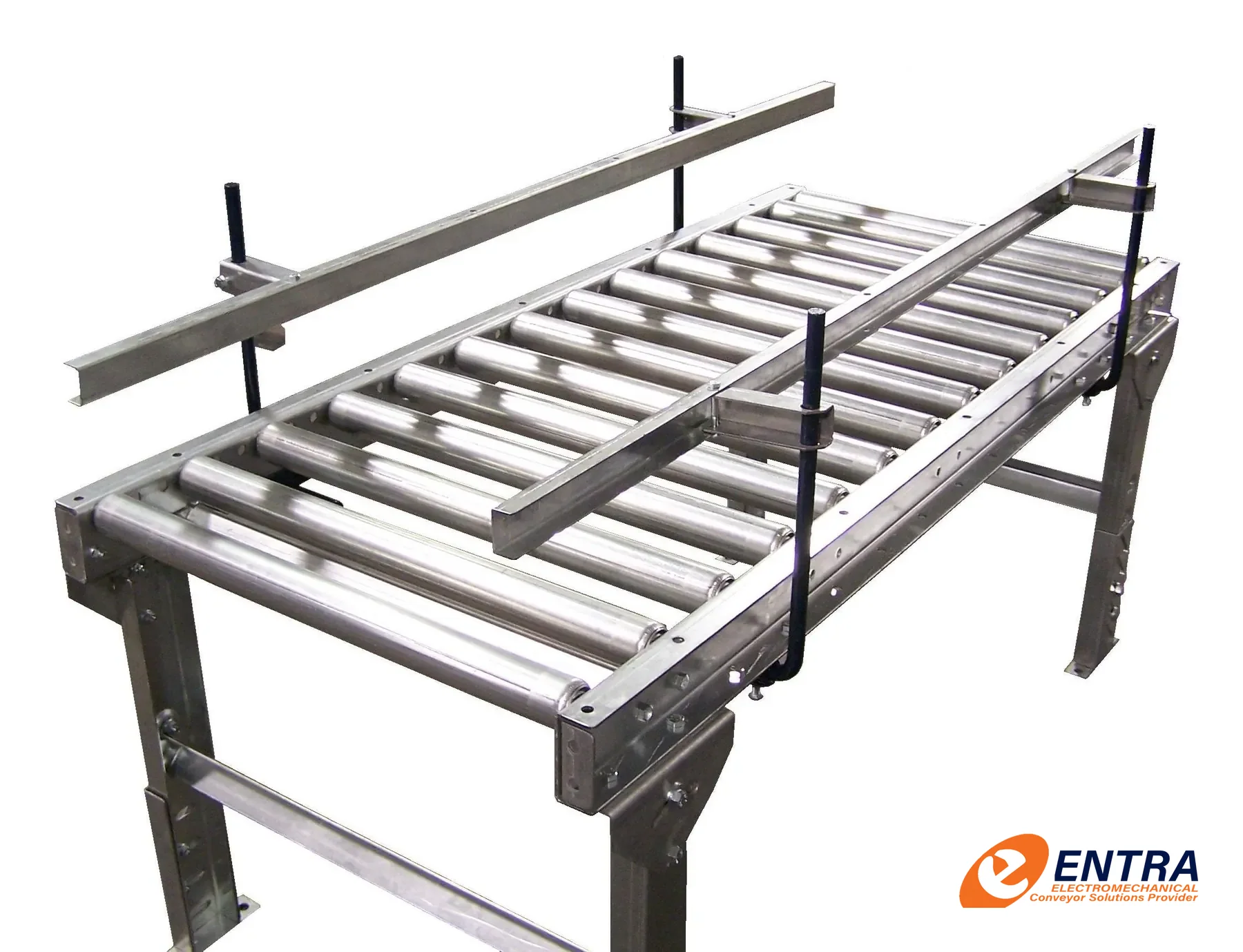
Modular frame supporting a compatible plastic-chain conveying path.
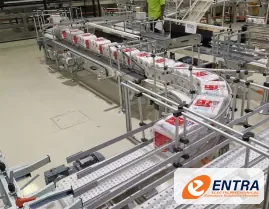
Conveyor combined with adjustable supports, guides and operator interfaces.
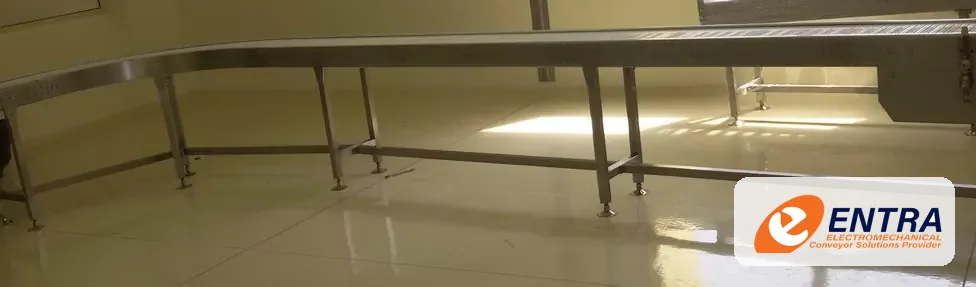
Compact frame and transfer sections matched to adjacent equipment.
Technical design basis
These items identify the information used to engineer this equipment. Numerical limits appear only where the referenced catalogue supports them; other values are confirmed for each project.
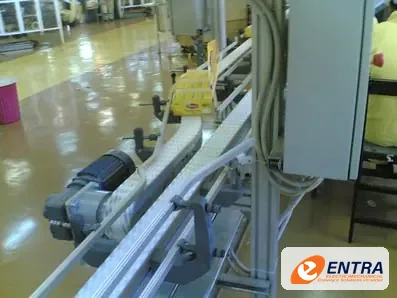
The supplied gallery has a dedicated aluminium-conveyors category with four references. The images show aluminium conveyor structures; they should not be read as proof of a particular profile series or load rating.
| Profile series & section | Selected from structural load, span, stiffness and accessory compatibility. |
|---|---|
| Conveying surface | Belt, chain or roller type selected independently for product contact and process duty. |
| Frame deflection | Checked for product load, conveyor span, support spacing and dynamic operation. |
| Mounting & accessories | Footing, brackets, guarding, guides and sensor mounts coordinated with the machine layout. |
Engineering considerations
A useful proposal starts with operating conditions and interfaces. Final sizing is confirmed by engineering review.
Identify belt, chain, roller or other conveying element; aluminium frame is not a substitute for medium selection.
Product load, frame span, support spacing, deflection limits, dynamic effects and anchoring.
Corrosion exposure, cleaning chemicals, temperature, contamination and required finish.
Machine interfaces, guarding, sensor brackets, cable routing, adjustable feet and maintenance access.
Photographs
Captions identify the equipment shown; a photo is not a claim that every image is a completed installation of the exact configuration described.
ENTRA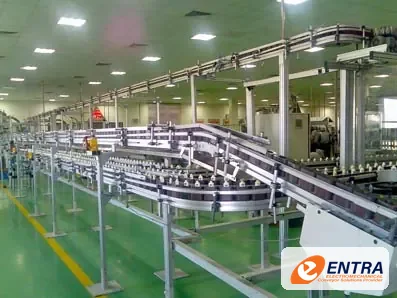 ENTRA
 ENTRA
 ENTRA
Related equipment
Continuous belt transport for cartons, cases, packaged products and suitable unit loads across production, pa…
Gravity and powered roller conveyor arrangements for conveying, accumulation, transfer and distribution of co…
Modular plastic-chain conveyor platforms for compact product handling, straight runs, curves and engineered l…
Stainless conveyor structures and conveying arrangements designed around defined product-contact, cleaning an…
Request a quotation
Share the product, the layout and what the line has to do. An ENTRA engineer reviews every enquiry and replies with questions or a proposal.
