Why the choice of supplier matters
A conveyor system is not a catalogue purchase. It has to fit your product, your process, your building and your machines, it is installed inside a running plant, and it needs service and spare parts for many years. The supplier you choose decides how well the system fits, how smoothly the project runs, how quickly problems are solved after start-up, and how much the system really costs over its life. For plants in Egypt, Saudi Arabia, the UAE and the wider region, local presence and support weigh as heavily as the equipment itself.
This guide gives a practical checklist for comparing conveyor and material handling providers, and the questions that reveal real capability.
1. Engineering capability
- Do they start from your product and process? A good supplier asks detailed questions about products, rates, layouts and machines before proposing equipment. A quotation sent after one phone call is a warning sign.
- Mechanical, electrical and controls in one team? Conveyors fail at the interfaces. A supplier that designs mechanics, panels and PLC software together, and integrates with your machines, removes a common source of disputes; see industrial automation and conveyor integration.
- Calculations and drawings: ask how they size drives, belts and structures, and whether you will receive layouts, 3D models and documentation.
- Range of solutions: a supplier with several conveyor technologies can choose the right one for each section rather than forcing one product everywhere.
2. References you can verify
- Ask for projects similar to yours in product, rate and industry, with photos and, where possible, a visit or a contact.
- Check that photos and case studies show the supplier’s own work, not stock images or manufacturer brochures.
- Ask what went wrong on a past project and how it was solved; experienced suppliers have honest answers.
3. Manufacturing, quality and safety
- Where is it built? Local manufacturing shortens lead times and makes modifications easier; imported components should come with clear origin and documentation.
- Quality system: ask about certified management systems, inspection of welding and finishing, and factory testing before delivery.
- Safety by design: ask how the supplier performs risk assessments and which standards they design to. International references include ISO 12100 for risk assessment with the related guard and control standards [1], EN 619 for unit-load conveyors [2] and EN 620 for bulk belt conveyors [3]. Multinational clients often require these, together with their own group standards.
- Site safety: installation teams working in a live plant must follow your permit-to-work and lock-out procedures.
4. Installation, service and spare parts
- Who installs and commissions: the supplier’s own team or a subcontractor?
- How quickly can an engineer be on site after a breakdown, and is remote support available for controls?
- Which spare parts are stocked locally, and what are the lead times for the rest?
- Is training provided for operators and maintenance staff, and are manuals supplied in the languages your team uses?
In the region, the practical difference between a supplier with a local team and stock and one without is often counted in days of lost production.
5. Comparing quotations fairly
Conveyor quotations are easy to compare on price and hard to compare on scope. Before comparing, make sure each offer states:
| Scope item | Question to ask |
|---|---|
| Equipment list | Lengths, widths, speeds, drives, materials and finishes for every section |
| Controls | Panels, PLC, HMI, sensors, software, interfaces with machines |
| Safety | Guards, fences, emergency stops, light curtains, risk assessment |
| Installation and commissioning | Who, how long, which shutdown windows, what the client must provide |
| Testing and acceptance | Factory and site acceptance tests, performance run criteria |
| Documentation and training | Drawings, manuals, certificates, training sessions |
| Spares and warranty | Recommended spares list, warranty period and conditions |
| Exclusions | Civil works, utilities, permits, machine modifications |
Then compare the total cost of ownership: purchase price plus energy, maintenance, spare parts and the cost of downtime over the expected life. A slightly higher price for efficient drives, better transfers and responsive local service often costs less overall; see how to reduce handling costs through conveyor automation.
Local or imported?
Imported standard equipment from established manufacturers can be the right choice for specific components. Most projects in the region combine imported components (drives, bearings, belts, chains, sensors, controls) with local engineering, fabrication, installation and service. What matters is that one party takes responsibility for the system working as a whole, and is close enough to support it.
About ENTRA
ENTRA Electromechanical was founded in Cairo in 2007 and designs, supplies, installs and maintains conveyor and material handling systems for plants in Egypt and the Arab region [4]. Key facts, as published by the company:
- Sole agent for the MODU modular conveyor system in Egypt since 2009.
- A turnkey approach, with mechanical, electrical and controls engineers, project managers and account managers working with the client on the specific problem.
- A client list across food, personal care and heavy industry.
- Equipment from belts, plastic chains and rollers to elevators, lift tables, platforms and automation.
- ISO 9001, ISO 14001, ISO 45001 and SMETA certifications.
Our case studies describe real projects, from stainless steel carton conveying between filling and packing machines to heavy-duty belt conveyors on elevated steel structures, and the project photo gallery shows ENTRA installations in client plants.
Questions to ask during a supplier visit
- Can we see equipment in production, and talk to the engineers who would design ours?
- How do you test conveyors and control panels before delivery?
- Who will be our project manager, and how will progress be reported?
- How do you handle changes during the project?
- What is your standard warranty, and how do you respond to breakdowns after it ends?
- Which spare parts do you keep in stock locally?
- Can you show a recent risk assessment and a set of manuals from a similar project?
Red flags
- A firm price without seeing the product, layout or machines.
- Reference photos that look like manufacturer catalogues rather than installations.
- No clear answer on who is responsible for controls and machine interfaces.
- Safety treated as an optional extra (“guards on request”).
- No local service team or spare parts, with long lead times for simple items.
- Scope gaps that appear later as variations: installation, cables, guards, documentation.
Supplier checklist
- Asked detailed questions about product, rate, layout and machines
- Mechanical, electrical and controls engineering in one responsible team
- Verifiable references in similar applications
- Clear safety approach and standards
- Local installation, service and spare parts
- Complete, comparable scope in the quotation
- Documentation and training included
Frequently asked questions
What should I look for in a conveyor supplier?
Engineering capability for your type of product and process, relevant references you can verify, in-house or reliable local manufacturing and installation, controls and integration skills, local service and spare parts, clear documentation and safety practice.
Should I buy from a local supplier or import a conveyor?
Imported standard equipment can be the right choice for some components, but a local partner usually responds faster for engineering, installation, changes, service and spare parts. Many projects combine imported components with local engineering and installation.
How should I compare conveyor quotations?
Check that each offer covers the same scope: equipment list, controls, guards, installation, commissioning, documentation, training, spares, warranty and exclusions. Compare the total cost of ownership, not only the price.
Where does ENTRA work?
ENTRA was founded in Cairo in 2007 and designs, supplies, installs and maintains conveyor and material handling systems for plants in Egypt and the Arab region.
Sources and references
- Pilz, Overview of generic machine-safety standards (EN ISO 12100, ISO 13849, ISO 14120, ISO 14119, IEC 60204). Checked 28 Nov 2026.
- EVS, EN 619:2022 Continuous handling equipment and systems — Safety requirements for equipment for mechanical handling of unit loads. Checked 28 Nov 2026.
- BSI, BS EN 620:2021 Continuous handling equipment and systems — Safety requirements for fixed belt conveyors for bulk materials. Checked 28 Nov 2026.
- ENTRA Electromechanical, About ENTRA (company history, scope and certifications as published by ENTRA). Checked 28 Nov 2026.
Sources are listed for technical accuracy. Names of standards bodies, regulators and manufacturers appear only to credit the source; ENTRA does not claim their products or specifications as its own.
Mechanical, electrical and controls engineers at ENTRA Electromechanical, Cairo. Since 2007 the team has designed, supplied, installed and maintained conveyor and material-handling systems for plants in Egypt and the Arab region. About ENTRA
Researched and drafted with AI assistance from the sources listed above, checked by recalculating every worked example, and published by the ENTRA Engineering Team.
Copyright © 2026 ENTRA. All Rights Reserved. Text, calculations and original graphics on this page may not be reproduced without permission.
Related articles
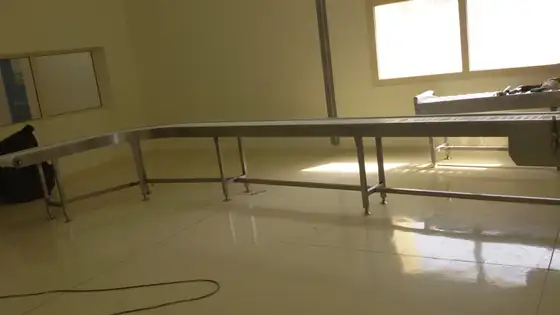 Industrial Solutions & Business
How to design an efficient conveyor system for a manufacturing facility
A step-by-step conveyor design process for factories: data, rates, layout, conveyor choice, controls, safety, installation and acceptance.
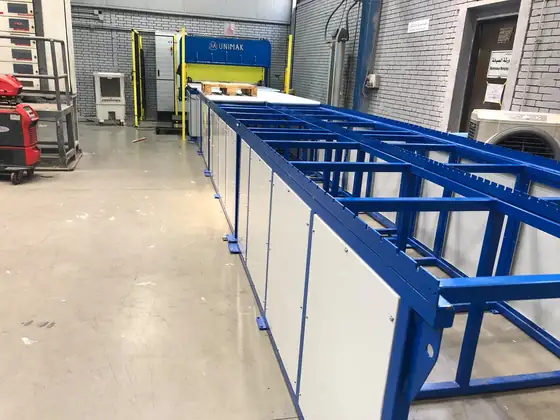 Industrial Solutions & Business
How to reduce industrial handling costs through conveyor automation
Where handling costs hide, how conveyor automation cuts labour, damage, waiting and energy, and how to calculate payback with your figures.
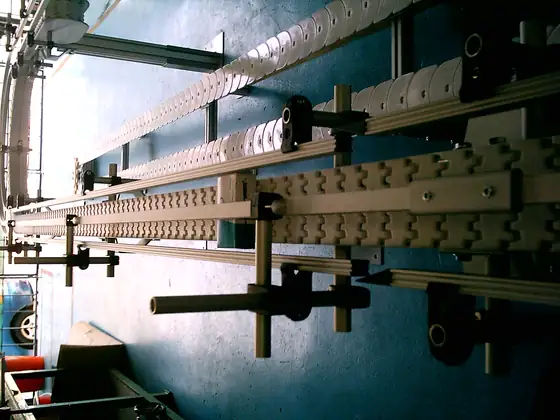 Conveyor Engineering
Complete guide to industrial conveyor systems: types, applications and selection
The main types of industrial conveyor, what each does best, and a step-by-step way to choose the right conveyor system for your product, rate and plant.
