
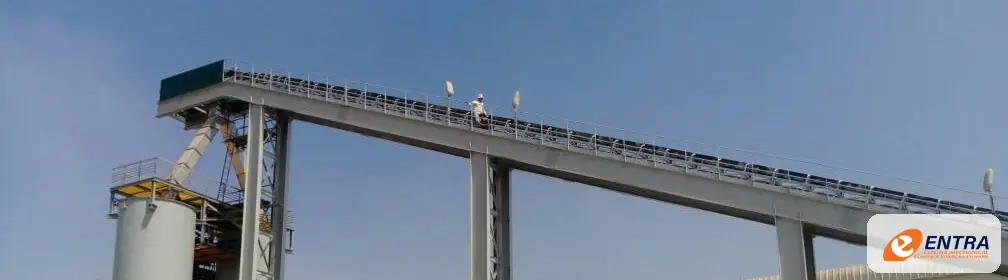
Why belt selection matters
The belt is the part of a belt conveyor that touches the product, carries the full pull of the drive, bends around every drum thousands of times a day and is exposed to everything in the environment. A belt that is wrong for the job announces itself quickly: products slip or stick, edges fray, covers crack or swell, the belt stretches until the take-up runs out, or the splice fails. Replacing a belt is usually more expensive in downtime than in material, so it pays to select it carefully the first time.
This guide gives a selection sequence that works for both light unit-goods belts and heavier belts, and the information to collect before asking a supplier.
Two families of conveyor belt
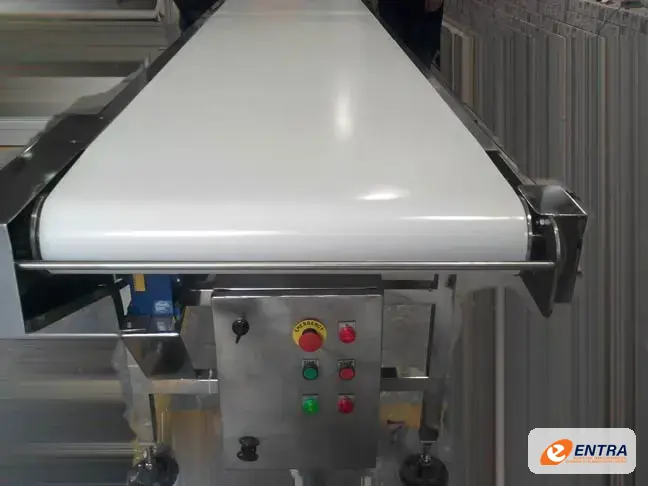
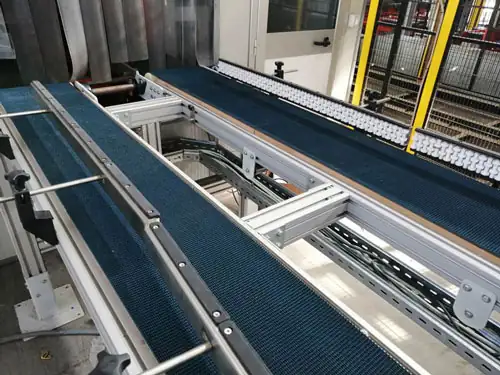
Light conveyor belts are thin, flexible belts, usually with a fabric (polyester or aramid) tension member and thermoplastic covers such as PVC, polyurethane, polyolefin or silicone. They are used for unit goods and for processing in food, packaging, logistics, textiles, printing and many other industries. ISO 21183-1 describes their principal characteristics and applications [1].
Heavy conveyor belts are thicker rubber or PVC belts with multi-ply textile or steel-cord carcasses, used mainly for bulk materials on troughed idlers. ISO 14890 specifies rubber- or plastics-covered conveyor belts of textile construction for general use on flat or troughed idlers, and explicitly excludes light conveyor belts as described in ISO 21183-1 [2].
Modular plastic belts are a third option with very different behaviour; see modular belt conveyors.
Selection sequence
1. Start from the product
- What is carried: unit goods (size, mass, base, stability) or bulk material (lump size, abrasiveness, bulk density)?
- Temperature of the product, and whether it is oily, fatty, sticky, wet, sharp or abrasive.
- Does the product touch the belt directly, and is it food, feed, pharmaceutical or cosmetic?
- Does the product need to stay put on inclines, slide during accumulation, or release cleanly at the end?
2. Define the duty
- Conveyor length, centre distance, belt width and speed.
- Load on the belt, inclines and declines, accumulation (products held back while the belt runs).
- Bed type: slider bed or rollers, and the belt’s underside friction against it.
- Drum diameters, including knife edges and small transfer rollers, and whether the conveyor has back-bends or reverses.
- Operating hours and start-stop frequency.
3. Choose the tension member and strength
The tension member carries the belt pull. Its strength is chosen from the calculated maximum belt pull with a safety margin, and its stiffness affects how much the belt stretches and how much take-up travel is needed. Every belt type also has a minimum pulley diameter: running a belt over smaller drums or knife edges than its data sheet allows overstresses the carcass and the splice. Our guide to belt conveyor drive power shows how to estimate the effective pull.
4. Choose the cover material
| Cover | Typical strengths | Typical limits |
|---|---|---|
| PVC | Economical, wide range of surfaces and colours, general unit goods | Plasticiser migration with oils and fats, moderate temperature range |
| Polyurethane (PU/TPU) | Food processing, resistance to oils and fats, cut and abrasion resistance | Hydrolysis in hot, wet conditions for some grades |
| Polyolefin (PE, PP) | Hygiene, low absorption, chemical resistance | Lower grip on some surfaces |
| Silicone | High temperatures, non-stick release | Cost, lower mechanical strength |
| Rubber (NR, SBR, NBR, EPDM etc.) | Bulk materials, impact, abrasion, heat-, oil- or fire-resistant grades | Weight, food-contact grades needed for food |
This table is a general orientation only. Each belt manufacturer publishes temperature limits and chemical resistance for its own compounds, and those data sheets are the basis for the final choice.
5. Choose the surface
- Smooth or matt: horizontal transport, easy cleaning, products slide during accumulation.
- Structured, rough or grip tops: inclines and declines, positive transport of cartons and bags.
- Profiles, cleats and sidewalls: steep inclines, portioning, retaining loose material.
- Low-friction or fabric surfaces: accumulation, turning products, low noise.
6. Check the special requirements
- Food contact: covers must comply with the applicable rules, such as the EU framework Regulation 1935/2004, Regulation 10/2011 on plastic materials and the good manufacturing practice Regulation 2023/2006 [3], and, for the US market, FDA regulations such as 21 CFR 177.2600 for rubber articles intended for repeated use [4]. Ask for a declaration of compliance for the exact belt type and colour.
- Antistatic or conductive belts for electronics, dusty or explosive atmospheres.
- Flame-retardant belts where required by fire risk assessments.
- Detectable or coloured belts to support foreign-body control in food.
7. Choose the joint
Endless joints (finger splices, step splices, hot-vulcanised joints) give the smoothest running and highest strength. Mechanical fasteners allow fast installation on conveyors that cannot be dismantled, but they are weaker, can damage scrapers and are usually unsuitable for food contact. The joint method affects belt length tolerance, minimum pulley diameter and installation time.
What to send when ordering a belt
| Information | Why it matters |
|---|---|
| Existing belt type and marking, photos of top and underside | Fastest way to match or improve the current belt |
| Width and length (or drum centres and take-up position) | Correct size and enough take-up travel |
| Smallest drum or knife-edge diameter | Belt must be flexible enough |
| Product, mass per metre, temperature, oils or chemicals | Cover and carcass selection |
| Speed, inclines, accumulation, bed type | Strength, surface and underside |
| Cleaning method and chemicals | Cover compatibility and hygiene |
| Food contact, antistatic, flame-retardant needs | Compliance documents |
| Joint type and whether the conveyor can be opened | Installation method on site |
Common belt selection mistakes
- Copying the old belt without asking why it failed. A belt that cracked or stretched early was probably the wrong type.
- Ignoring the minimum drum diameter at transfers and knife edges.
- Choosing grip without checking accumulation. A grippy surface that is good for inclines damages products that must slide while queuing.
- Forgetting the underside. Underside friction on a slider bed drives power, heat and noise.
- Food grade “by colour”. Blue or white does not mean food compliant; only the declaration of compliance does.
- Over-tensioning a new belt to cure slip or tracking problems that come from elsewhere; see belt slip on the drive drum and belt tracking.
Typical belt choices by application
| Application | Typical belt |
|---|---|
| Cartons and cases, horizontal | Light fabric belt, PVC or polyolefin, smooth or matt top, low-friction underside on a slider bed |
| Cartons on inclines | Light belt with rough or grip top; cleats for steeper angles |
| Unpackaged food, fatty or oily | PU or polyolefin food-contact belt, or a modular plastic belt for wet areas |
| Bakery and confectionery release | Belts with non-stick or specific release surfaces, sometimes silicone |
| Electronics | Antistatic or conductive light belt |
| Bulk granules and aggregates | Rubber textile belt to ISO 14890-type specifications on troughed idlers |
| Hot or oily bulk materials | Heat- or oil-resistant rubber grades, or steel-chain conveyors |
Each row is a starting point for discussion with the belt supplier, not a specification.
Installation and running-in
A new belt should be installed on a clean, square conveyor: drums and rollers aligned, worn lagging replaced, beds smooth and free of burrs. Tension it to the manufacturer’s recommended elongation, not “as tight as possible”, run it in, and check tracking and tension again after the first hours of operation, because fabric belts settle. Record the belt type, date and tension setting so that the next replacement starts from facts.
Frequently asked questions
What is the difference between light and heavy conveyor belts?
Light conveyor belts, described in ISO 21183-1, are thin fabric belts with PVC, PU or similar covers used for unit goods and light processing. Heavier rubber belts of textile or steel-cord construction carry bulk materials on troughed idlers and are covered by standards such as ISO 14890.
Which belt material is used for food contact?
Belts with covers made from materials that comply with food-contact rules, such as the EU framework Regulation 1935/2004 and Regulation 10/2011 for plastics, or US FDA regulations. Ask the supplier for a declaration of compliance for the exact belt type.
What details are needed to order a replacement belt?
Belt type and manufacturer reference if known, width, length (or drum centres and take-up), joint type, drum diameters, product, load, speed, temperature, environment and any food-contact or antistatic requirements.
How do I know the drum diameter is large enough for the belt?
Every belt type has a minimum pulley diameter in its data sheet. Running on smaller drums overstresses the carcass and the splice and shortens belt life.
Sources and references
- ISO, ISO 21183-1:2005 Light conveyor belts — Part 1: Principal characteristics and applications. Checked 28 Nov 2026.
- ISO, ISO 14890:2026 Conveyor belts — Specification for rubber- or plastics-covered conveyor belts of textile construction for general use. Checked 28 Nov 2026.
- Trelleborg, Food contact regulations and international standards (EU 1935/2004, 2023/2006, 10/2011; FDA; 3-A; NSF). Checked 28 Nov 2026.
- US eCFR, 21 CFR 177.2600 Rubber articles intended for repeated use. Checked 28 Nov 2026.
Sources are listed for technical accuracy. Names of standards bodies, regulators and manufacturers appear only to credit the source; ENTRA does not claim their products or specifications as its own.

Mechanical, electrical and controls engineers at ENTRA Electromechanical, Cairo. Since 2007 the team has designed, supplied, installed and maintained conveyor and material-handling systems for plants in Egypt and the Arab region. About ENTRA
Researched and drafted with AI assistance from the sources listed above, checked by recalculating every worked example, and published by the ENTRA Engineering Team.
Copyright © 2026 ENTRA. All Rights Reserved. Text, calculations and original graphics on this page may not be reproduced without permission.
Related articles
 Conveyor Engineering
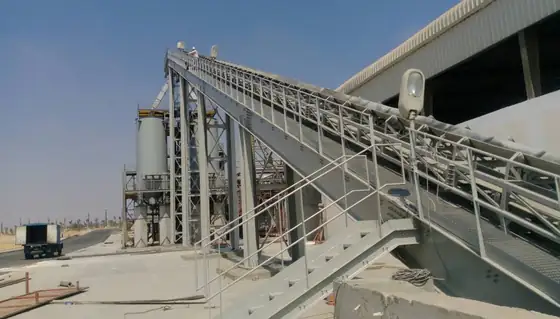
Belt conveyor systems: design, components, working principles and applications
How a belt conveyor works, what each component does, the design choices that matter, and where belt conveyors fit in food, packaging and bulk plants.
 Conveyor Engineering
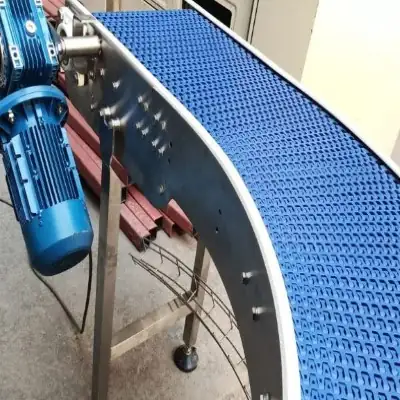
Modular belt conveyors: advantages, applications and engineering considerations
Modular plastic belt and plastic-chain conveyors: where they beat fabric belts, and the checks for material, sprockets, catenary and cleaning.
 Maintenance & Troubleshooting
Belt slipping on the drive drum
Why a belt slips on its drive drum, how wet drums, lagging, wrap angle and tension change grip, and the checks and fixes to apply.
