What material handling covers
Material handling is the movement, storage, protection and control of materials and products throughout manufacturing, warehousing and distribution. It starts at the receiving dock, continues through storage, production, packing and buffering, and ends when the goods leave the site. Every one of those steps costs time, space, labour and energy, and every one can damage the product or injure a person. None of them adds value that a customer pays for.
That last point is the key to good material handling: the goal is not to move material faster, but to move it less, over shorter distances, with fewer touches, and then to make the remaining movements safe, reliable and, where it pays, automatic.
Principles of efficient material flow
- Plan the flow before the equipment. Map how material actually moves today: routes, distances, quantities, frequencies and waiting points.
- Straight and short. Arrange processes in the order material passes through them, so routes do not cross, double back or share aisles with people unnecessarily.
- Unit loads. Move material in the largest practical, standardised unit (a pallet, a tote, a case) rather than item by item.
- Fewer touches. Every pick-up and set-down is a cost and a damage risk. Remove intermediate storage and re-handling where possible.
- Use height and gravity. Mezzanines, vertical conveyors and gravity flow lanes use space and energy efficiently.
- Ergonomics first. Work heights, reach and loads should suit people; heavy, frequent lifting is a sign that handling equipment is needed.
- Flexible and standard. Choose equipment and layouts that can be extended or rearranged as products and volumes change.
- Information travels with the material. Labels, barcodes or tags and the control system should know where each load is.
- Safety and maintenance are designed in, not added at the end.
Material handling equipment families
| Family | Examples | Best for |
|---|---|---|
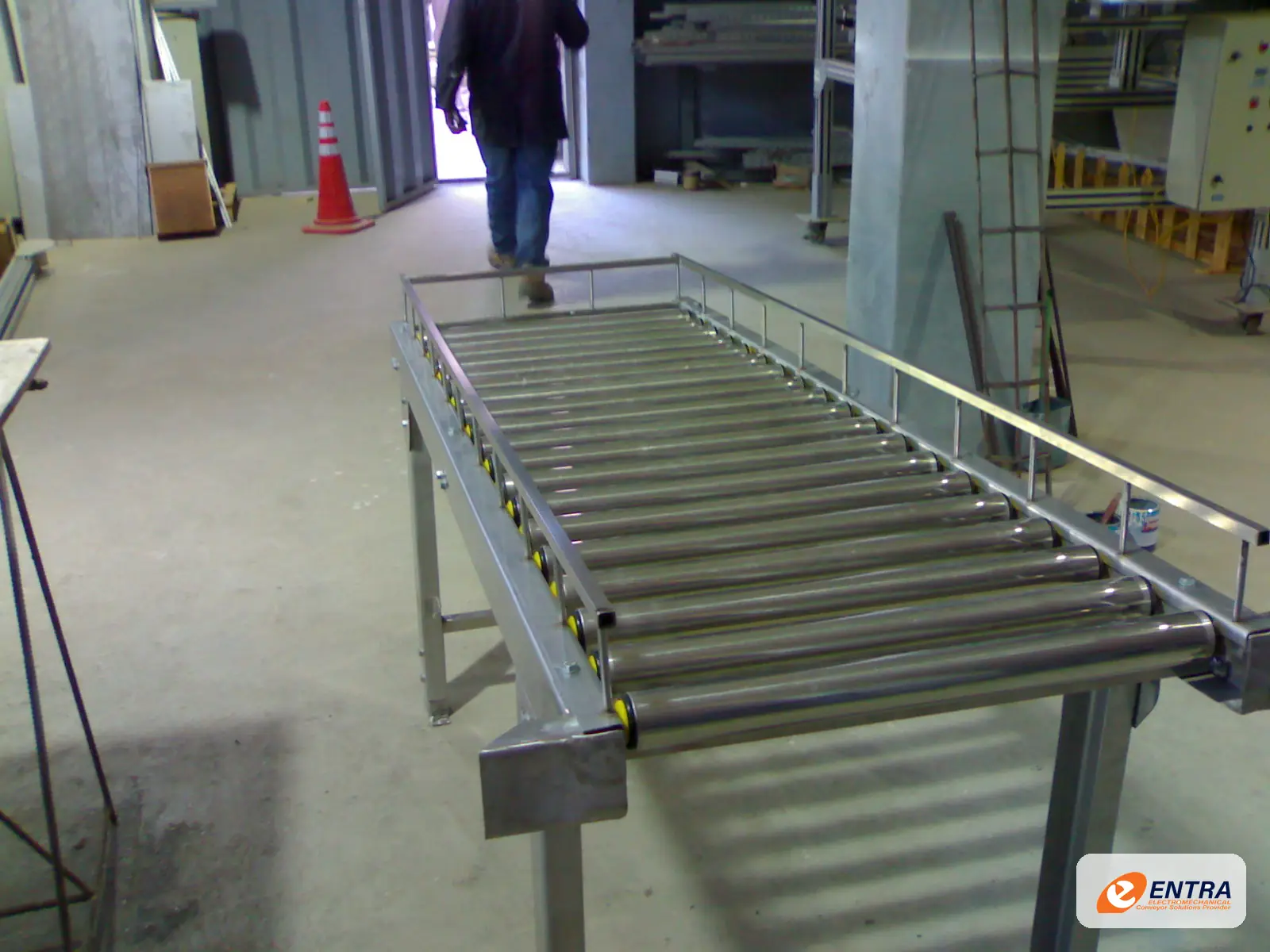
| Conveyors | Belt, roller, chain, modular, screw, vertical and spiral conveyors | Repetitive movement along a fixed route at a steady rate |
| Industrial trucks | Pallet trucks, stackers, forklifts, tuggers | Variable routes, lower or irregular volumes |
| Automated vehicles | AGVs and AMRs | Flexible automated routes between stations |
| Lifting and vertical movement | Industrial elevators, vertical conveyors, lift tables, cranes and hoists | Level changes, feeding machines, heavy parts |
| Positioning and handling aids | Tilters, inverters, turntables, manipulators, vacuum lifters | Presenting loads to people or machines safely |
| Unit-load formation | Palletisers, stretch wrappers, case packers | Building stable loads for storage and transport |
| Storage | Pallet racking, shelving, flow racks, buffers | Holding stock between processes |
| Platforms and access | Mezzanines, stainless steel platforms, stairs and crossovers | Using height and giving safe access to equipment |
| Identification and control | Barcodes, sensors, PLCs, warehouse and production software | Knowing and directing where each load goes |
Conveyors are the most efficient choice when the route is fixed and the volume is steady. Where routes change often or volumes are low, trucks or automated vehicles may fit better. Most plants use a combination; the art is placing each at the right point in the flow. Our guide to industrial conveyor systems covers the conveyor types in detail.
How to analyse your material flow
Step 1: collect the facts
- A list of products and load types (pallets, cases, totes, bags, bulk), with dimensions and mass.
- Quantities per hour and per day at normal and peak demand.
- A plant layout drawing with processes, storage areas, doors, columns and floor levels.
- The route each product family follows, from receiving to dispatch.
Step 2: map and measure
Draw the routes on the layout. A simple “from–to” table, listing for each pair of locations how many loads move between them per day and how far, quickly shows where most handling effort goes: multiply loads by distance for each route and rank the results. Walk the routes, time them and photograph the waiting points.
Step 3: identify the losses
- Long or crossing routes, back-tracking, and routes shared by forklifts and pedestrians.
- Repeated handling: the same load picked up and set down several times.
- Waiting: machines starved of material or blocked because the next step is full.
- Manual lifting and carrying of heavy or frequent loads. ISO 11228-1 sets recommended limits for manual lifting, lowering and carrying that take into account intensity, frequency and duration [1].
- Damage, mix-ups and lost items.
Step 4: simplify, then mechanise, then automate
First remove unnecessary moves by changing the layout or the sequence. Then mechanise the remaining heavy or repetitive moves with conveyors, lifts or handling aids. Automate only where volume, labour cost, quality or safety justify it. Our article on reducing handling costs through conveyor automation shows how to build the business case.
Material handling by zone
Receiving and storage
Unloading docks, inspection and put-away to storage. Typical equipment includes extendable truck conveyors, pallet conveyors to racking, and lift tables for dock height differences.
Production
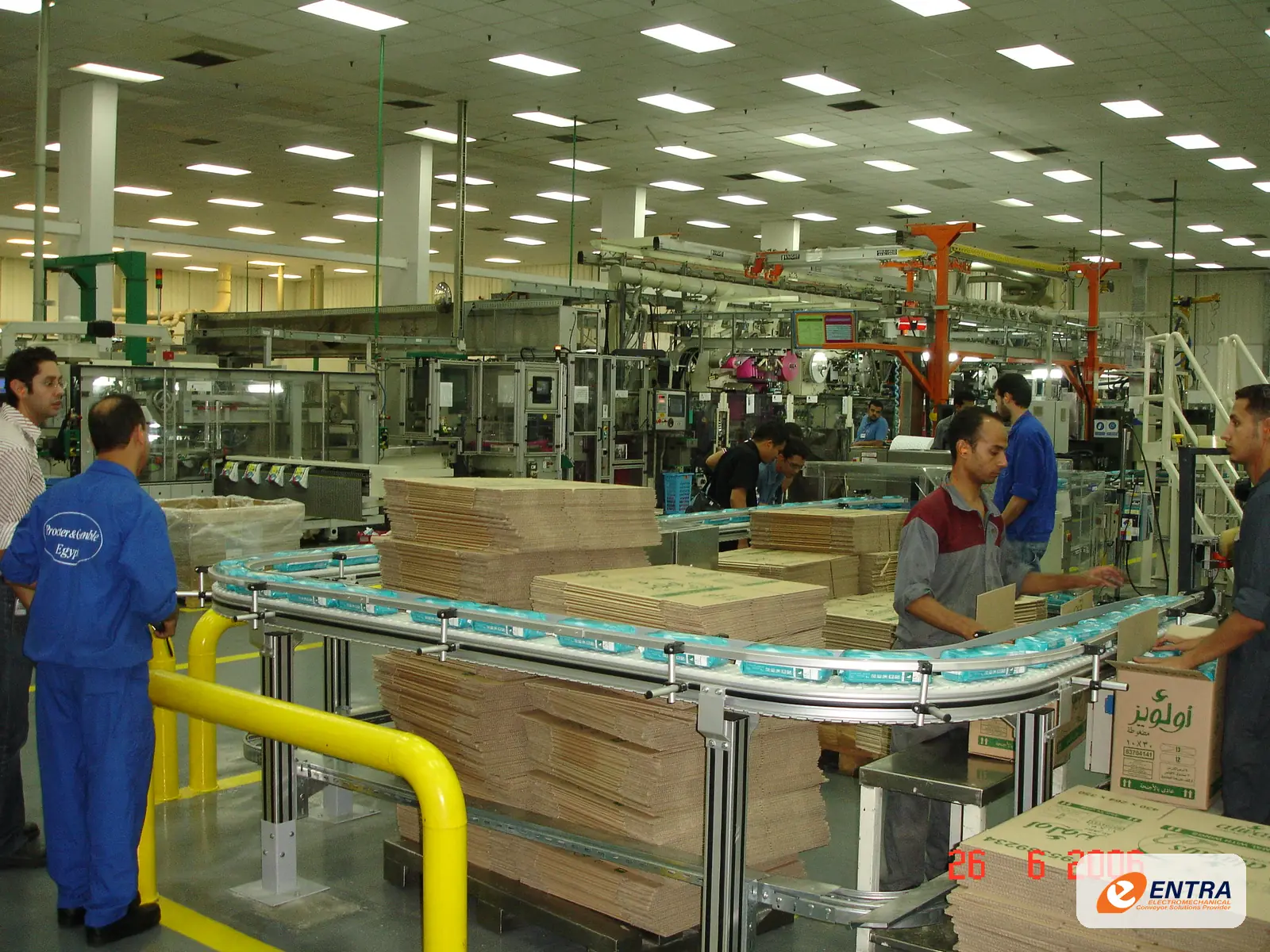
Feeding raw materials and components to machines and removing finished products. Screw conveyors and bulk belt conveyors feed process plant; roller, chain and modular conveyors link packaging machines; vertical conveyors and elevators link floors; tilting and inverting stations present loads to machines and operators.
End of line
Accumulation before the palletiser, palletising, wrapping, labelling and pallet transport to the warehouse. See pallet conveyor systems and accumulation conveyor systems.
Picking, packing and dispatch
Order picking, packing, sorting by destination and loading. See warehouse conveyor systems.
Integration and control
As soon as material handling links several machines or zones, the controls matter as much as the mechanics. The handling system must know where loads are, when the next step can accept them, and what to do when something stops. That ranges from a few sensors and a local control panel to integration with production and warehouse software. Our article on industrial automation and conveyor integration explains the options.
Safety in material handling
Handling systems combine moving machinery, heavy loads, vehicles and people. Machine safety follows the risk assessment and risk reduction approach of ISO 12100, with guards, interlocks and safety-related control functions designed to the related standards [2]. Conveyors for unit loads are covered specifically by EN 619 [3]. Separating pedestrian and vehicle routes, guarding conveyor nip points and providing safe access for maintenance should be part of the first layout, not corrections after commissioning.
Conveyors, forklifts or automated vehicles?
| Situation | Usually the best fit |
|---|---|
| Fixed route, steady flow, many loads per hour | Conveyors |
| Changing routes, occasional moves, mixed loads | Forklifts, pallet trucks or tuggers |
| Repeated routes between stations, moderate volumes, need for flexibility | AGVs or AMRs |
| Level change in a small footprint | Vertical or spiral conveyors, industrial elevators |
| Heavy loads presented to people or machines | Lift tables, tilters, manipulators |
| Long, crossing routes in a busy building | Overhead or elevated conveyors, or a re-layout |
Mixed solutions are common: conveyors for the steady high-volume flows, vehicles for the rest. The analysis in the steps above shows where each belongs.
Illustrative from–to analysis
Illustrative example, not an ENTRA project
A plant records daily loads and distances between its main areas. Packing to warehouse: 480 cases/day over 60 m (28,800 case-metres). Warehouse to dispatch: 40 pallets/day over 80 m (3,200 pallet-metres). Raw material store to mixing: 30 pallets/day over 120 m (3,600 pallet-metres). The packing-to-warehouse route dominates the handling effort and moves individual cases, so it is the first candidate for a conveyor, while the pallet routes may stay with forklifts or be shortened by moving the raw material store closer to mixing.
Checklist: is your material flow working?
- Can you trace each product family’s route on one drawing, without crossings or back-tracking?
- Do machines ever wait for material, or stop because the next step is full?
- Do operators lift or carry heavy loads many times per shift?
- Do forklifts and pedestrians share busy aisles?
- Is product damage or mixing a recurring cost?
- Could the current layout cope with 20% more volume?
If several answers point to problems, a structured flow analysis usually pays for itself quickly. ENTRA’s engineers start every project by studying the current line, the product and the space, then propose how to reorganise the flow before recommending equipment.
Frequently asked questions
What is a material handling system?
The combination of equipment, controls, procedures and people that moves, stores and protects materials through a plant, from receiving through production and storage to dispatch.
What are the main types of material handling equipment?
Transport equipment (conveyors, industrial trucks, cranes, AGVs), positioning equipment (lift tables, tilters, manipulators), unit-load formation (pallets, palletisers, wrapping), storage equipment (racking, shelving) and identification and control systems.
How do I know if my material flow is inefficient?
Typical signs are long or crossing transport routes, repeated handling of the same item, waiting stock between processes, manual lifting of heavy loads, damage to products, and machines waiting for material.
Where do I start improving material flow?
Start with facts: map the routes, measure quantities and distances, and identify the biggest losses. Then remove unnecessary moves before automating the ones that remain.
Sources and references
- ISO, ISO 11228-1:2021 Ergonomics — Manual handling — Part 1: Lifting, lowering and carrying. Checked 28 Nov 2026.
- Pilz, Overview of generic machine-safety standards (EN ISO 12100, ISO 13849, ISO 14120, ISO 14119, IEC 60204). Checked 28 Nov 2026.
- EVS, EN 619:2022 Continuous handling equipment and systems — Safety requirements for equipment for mechanical handling of unit loads. Checked 28 Nov 2026.
- ENTRA Electromechanical, About ENTRA (company history, scope and certifications as published by ENTRA). Checked 28 Nov 2026.
Sources are listed for technical accuracy. Names of standards bodies, regulators and manufacturers appear only to credit the source; ENTRA does not claim their products or specifications as its own.
Mechanical, electrical and controls engineers at ENTRA Electromechanical, Cairo. Since 2007 the team has designed, supplied, installed and maintained conveyor and material-handling systems for plants in Egypt and the Arab region. About ENTRA
Researched and drafted with AI assistance from the sources listed above, checked by recalculating every worked example, and published by the ENTRA Engineering Team.
Copyright © 2026 ENTRA. All Rights Reserved. Text, calculations and original graphics on this page may not be reproduced without permission.
Related articles
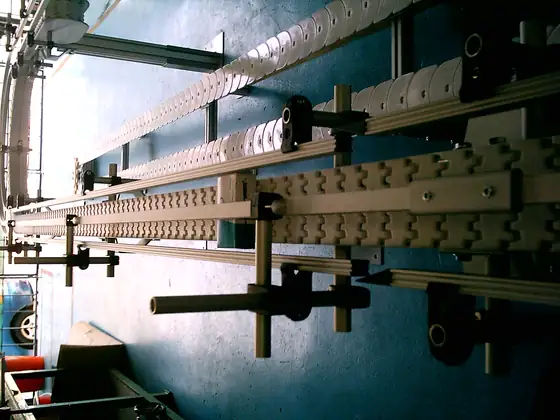 Conveyor Engineering
Complete guide to industrial conveyor systems: types, applications and selection
The main types of industrial conveyor, what each does best, and a step-by-step way to choose the right conveyor system for your product, rate and plant.
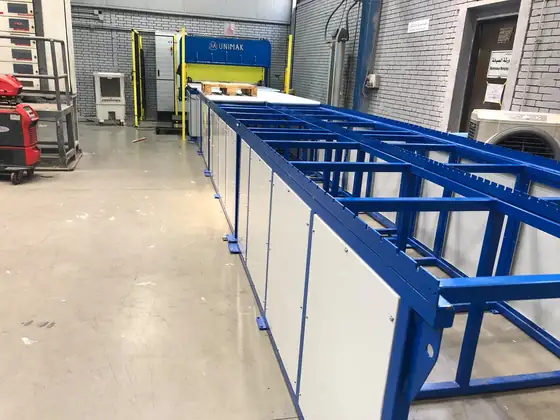 Industrial Solutions & Business
How to reduce industrial handling costs through conveyor automation
Where handling costs hide, how conveyor automation cuts labour, damage, waiting and energy, and how to calculate payback with your figures.
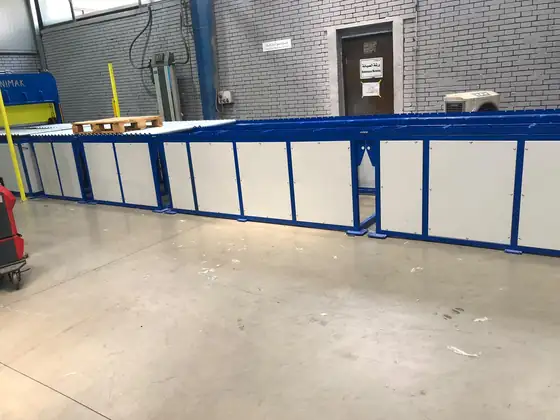 Material Handling & Automation
Warehouse conveyor systems: improving logistics, distribution and order fulfilment
Where conveyors fit in receiving, picking, packing, sorting and dispatch, and how to plan a warehouse conveyor system step by step.
